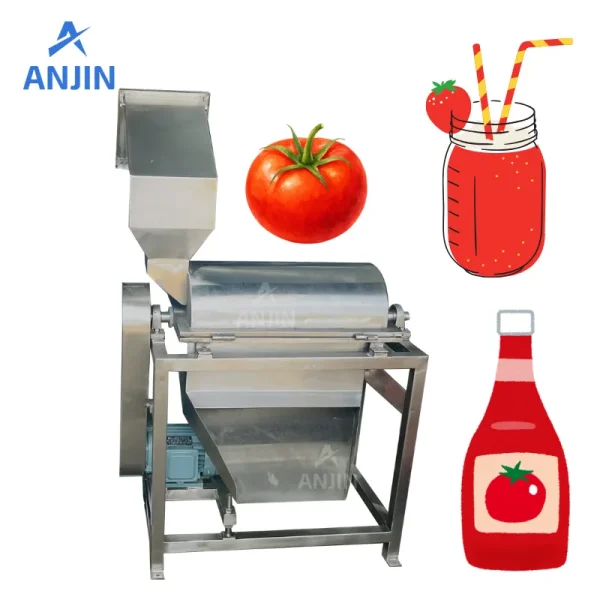
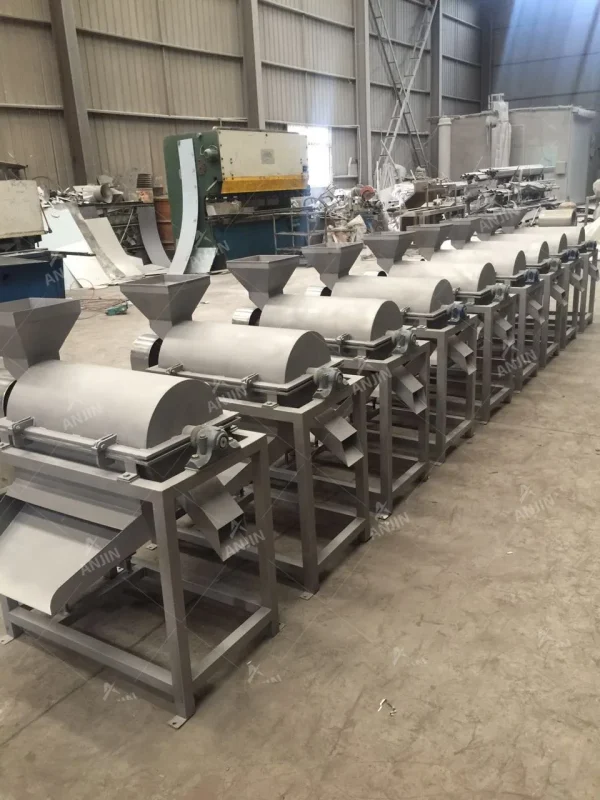
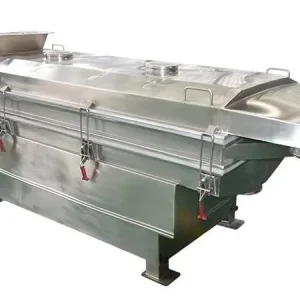
Fruit Seed Removing Machine 1 t/h
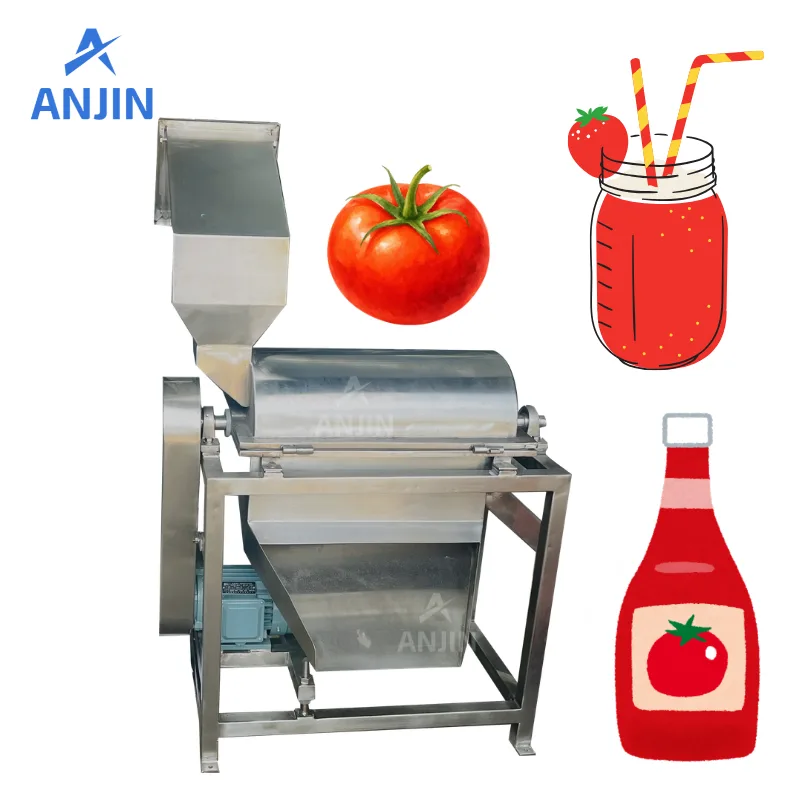
Between the crusher that bursts the fruit and the refiner that sets the final texture sits an unglamorous machine that decides whether your line runs all afternoon or stops every hour: the seed removing stage. Tomato seeds, grape pips, jujube stone fragments and berry grit do not dissolve — they ride the pulp, chew refiner paddles, score sieves and surface later in the bottle as dark specks. A fruit seed removing machine intercepts them early, on a screen sized to pass pulp and hold everything hard.
How it works
Crushed fruit mash is pumped or gravity-fed into a cylindrical or conical screen housing. An internal agitator — paddles, brushes or a rotating screw set just clear of the screen — keeps mash moving against the aperture without grinding the seeds themselves. Seed-free pulp passes through the screen apertures, typically 0.6 to 1.5 mm depending on product; seeds, stone fragments, skin sheets and other hard rejects travel axially along the screen to a separate discharge, kept wet by a small flush of juice or water so the screen does not blind. Screen angle, agitation speed and flush rate are the three adjustments; the art is rejecting hard matter without carrying away pulp yield.
Suitable for
Tomato paste and puree lines where seed fragments darken product and abrade evaporator surfaces; berry processing — raspberry, strawberry, currant — where seeds must mostly leave before a smooth coulis or clear-adjacent puree; jujube and date puree producers whose stone shards are a genuine safety hazard in an otherwise soft product; grape processing for juice where pips add astringent tannin buyers taste; any pulping line feeding a finisher, because seeds that reach the finisher blind its finer screens and cut its paddles.
Not suitable for
Whole-fruit pitting — a machine that de-seeds mash cannot pit an intact plum or date; buy a pitter for whole fruit and this for pulp. Products where the seed is the value, such as pumpkin or melon seed recovery, need a dedicated seed-extraction train. Very fibrous mango or guava pulp will blind fine screens fast and wants a finisher-first configuration instead. And if your downstream is a cloudy, seeded-style juice where seed presence is authentic, this machine over-cleans.
Material & compliance
Housing, screen and agitator in SUS304 (EN 1.4301); screens are the wear item — ask for stainless perforated or slotted screens with a stated stock of spares, because a warped screen seeds your product with shavings. Food-grade brush or scraper materials at the screen face; quick-open clamps so screens change and clean in minutes.
Supplied with CE declaration of conformity and DoC on request; material certificate EN 10204 3.1 available for contact parts.
Selection notes
Ask which screen apertures ship with the machine and what spares cost — one machine should serve tomato, berry and jujube with different screens. Ask whether the agitator speed is variable, since grinding speed on tomato bruises flavour and on jujube smears starch over the screen. Check the flush-water arrangement: a machine that needs a litre of water per kilo of pulp dilutes your brix before the evaporator has started. Ask for the seed-rejection purity and pulp-loss figures on your own mash at pilot scale, not a datasheet average.
When you should not buy this machine: If your line already runs a two-stage finisher whose first screen does this job adequately, a dedicated seed remover is a third machine doing an overlap. And if your product is single-press cloudy juice with coarse screening, spend the money on the press instead.
Key specifications
| Parameter | Value |
| Capacity | 0.5-2 t/h mash (TYPICAL, confirm with factory) |
| Screen aperture | 0.6-1.5 mm interchangeable (TYPICAL) |
| Screen type | Stainless perforated / slotted cylinder or cone |
| Agitator | Paddle / brush rotor, variable speed (TYPICAL) |
| Seed rejection | 95%+ hard matter (TYPICAL) |
| Flush requirement | Minimal, recirculated juice or water |
| Contact material | SUS304 (EN 1.4301) |
| Power supply | 380V/3P/50Hz, 1.5-4 kW class |
Specification values are industry-typical ranges for this machine class and are not verified against a specific factory datasheet. Replace them with measured factory data before publication.
FAQ
Does it remove every seed from tomato pulp?
Practically 95%-plus of hard matter down to the screen aperture; a few soft immature seeds pass, which is why tomato lines pair this with a finisher screen behind it. If your buyer spec is absolute zero seed, plan the two machines as one stage, not a debate.
Will it handle jujube stone fragments?
Yes — and this is where the machine earns its keep, because a stone shard in a soft puree is a dental claim, not a quality note. Use a coarser screen than tomato, keep the flush generous, and inspect the rejected stream to tune the rotor speed.
Why not just use a finer finisher screen?
A finisher screen below about 0.5 mm blinds rapidly on seed load and wears paddles. Pre-removing the hard fraction lets the finisher run its intended aperture at stable capacity — the two machines pay for each other in uptime.
Related equipment
This unit is one stage of a complete processing line. For the full range of pulping and juicing equipment, or to compare this model against the Fruit Crusher 3000 kg/h, see the complete equipment catalogue. Capacity, material grade and utility requirements can be confirmed through a quote request.
Reviews
There are no reviews yet.