Steam Blanching Machine 1 t/h
Hot-water blanching does its enzymatic job well and pays for it in water: every kilo of vegetable blanches in tens of litres that carry away vitamins, colour, sugars and effluent-treatment load. A steam blanching machine replaces the water bath with direct steam contact — the vegetable never touches heating water, so water-soluble nutrients stay in the product, the effluent stream shrinks to condensate, and the blanch-water microbiology that audits probe simply ceases to exist. It is the blanch of choice wherever water is expensive, vitamins are the label claim, or wastewater is the compliance headache.
How it works
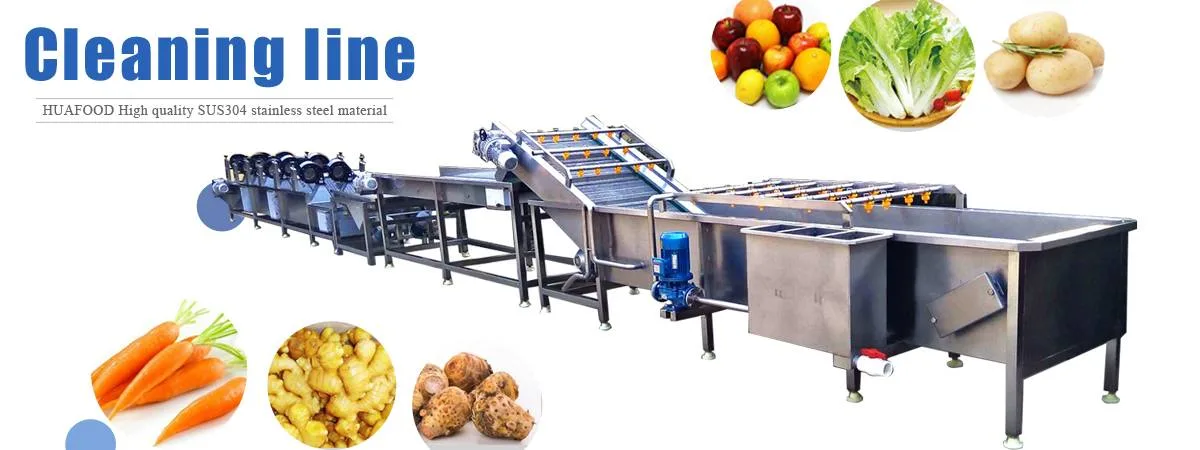
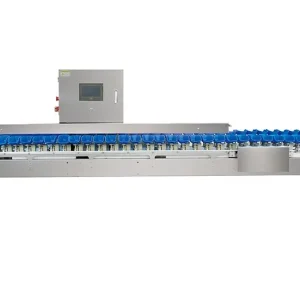
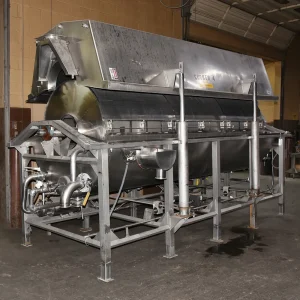
Prepared vegetables spread onto a perforated or solid belt that carries them through an insulated steam tunnel or chamber. Live steam injects directly into the enclosure, condensing on the cold product surface and delivering latent heat fast — steam condensation transfers heat more aggressively per degree than hot water at the same temperature. Temperature zones and dwell set the enzyme kill: centre temperature must reach the blanch standard and hold, verified by peroxidase testing on exit samples. Exit stages cool product — air or a cold-water spray — to stop carryover cooking. Condensate drains continuously, carrying leached solids to a small concentrated stream instead of a dilute bath.
Suitable for
Frozen-vegetable lines where vitamin retention is the specification; leafy and cut vegetables high in water-soluble nutrients; plants with tight wastewater permits that cannot fund blanch-water treatment; fruit-prep lines blanching before peeling, where steam loosens skin simultaneously; processors whose audits flag water-bath microbiology as recurring risk.
Not suitable for
Products needing immersion to sink or wash — floaters that steam dries unevenly; root vegetables at very large volume, where water blanchers remain cheaper per tonne; lines without a reliable steam boiler and its permits — the machine is a consumer, not a source; and buyers whose recipes count on blanch-water leaching to mellow flavour, which steam preserves instead.
Material & compliance
Tunnel, belt and enclosures in SUS304 (EN 1.4301) food-grade finish with insulated panels; steam plumbing with traps, filters and pressure controls; condensate drain in food-safe routing; belt speed and zone temperatures instrumented for HACCP records.
Supplied with CE declaration of conformity and DoC on request; steam-contact material certificates EN 10204 3.1 available.
Selection notes
Start from your steam supply: the machine’s duty is set by boiler capacity and pressure, and a blanch quoted faster than your boiler delivers is a stall in waiting. Ask for the peroxidase-negative guarantee at your cut size — dwell and zone specs should be validated on your product, not a datasheet vegetable. Compare vitamin retention numbers if your label claims them; steam blanching wins on paper, and a trial with lab analysis makes the claim defensible. Check the cooling stage design — steam blanching without a matched cool-down trades enzyme kill for carryover softening. And audit the condensate path, which concentrates leachate; small stream, but concentrated.
When you should not buy this machine: If your boiler is sized for the kettle line and nothing more, add the boiler cost to the blancher before comparing with water — the honest comparison often flips. And if your product is roots and hard vegetables where nutrient leaching is minor and volume is high, the water bath’s simplicity still wins on cost per tonne.
Key specifications
| Parameter | Value |
| Capacity | 500-2000 kg/h by cut size and dwell (TYPICAL, confirm with factory) |
| Blanch medium | Direct steam contact, zoned |
| Dwell | 1-5 min by product (TYPICAL) |
| Steam consumption | Boiler-sized; quote against your supply (TYPICAL) |
| Contact material | SUS304 (EN 1.4301) |
| Power supply | 380V/3P/50Hz, drives and controls 2-5 kW class |
Specification values are industry-typical ranges for this machine class and are not verified against a specific factory datasheet. Replace them with measured factory data before publication.
FAQ
Is steam blanching really better for vitamins?
Water-soluble vitamins and colour leach into blanch water; steam contact leaches only into condensate on the surface. Retention advantage is real and measurable — ask for a factory trial with lab analysis on your product if the label claim matters to your market.
Do we still need cooling after steam blanching?
Yes — enzyme kill stops at temperature, but texture keeps cooking until cooled. Air cooling or a cold-water spray stage sized to your dwell exits product at the specification that freezing or packing assumes. Budget the cooler with the blancher, not after it.
Does it eliminate blanch-water microbiology risk?
It eliminates the water bath, which is where the risk lived — condensate is a far smaller, more controllable stream. HACCP plans still need validation, but the recurring audit finding of bath-water counts typically disappears, which is a major reason audited plants convert.
Related equipment
This unit is one stage of a complete processing line. For the full range of cooking and blanching equipment, or to compare this model against the Continuous Belt Blancher 2500 kg/h, see the complete equipment catalogue. Capacity, material grade and utility requirements can be confirmed through a quote request.
Reviews
There are no reviews yet.