Rotary Drum Blancher 2 t/h
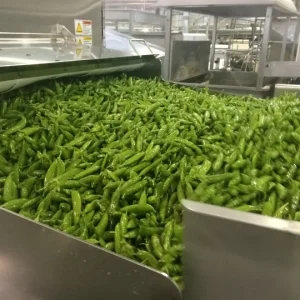
Blanching is a chemistry deadline: peroxidase must die, at temperature, in every piece, before freezing or drying locks whatever state the product was in. Belt blanchers do this well for robust products, but loose cut vegetables — dice, slices, leafy pieces — get battered on belts and screens. The rotary drum blancher takes a different route: it tumbles product slowly through a heated water drum, so each piece turns through the temperature zone instead of scraping along a belt, and comes out blanched to the centre and still whole.
How it works
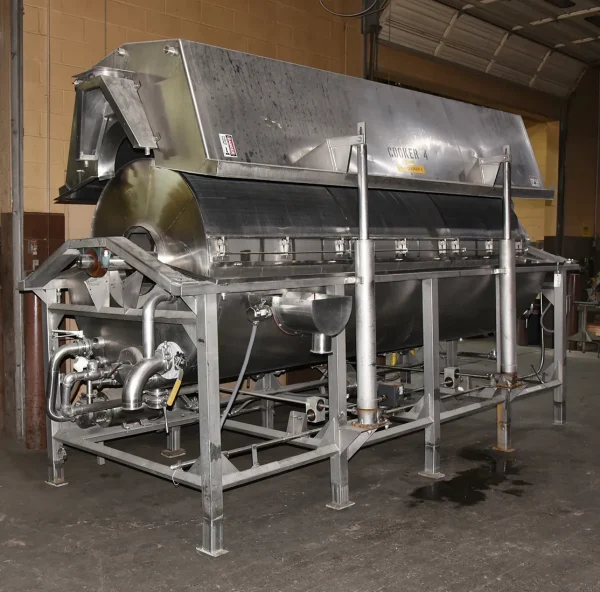
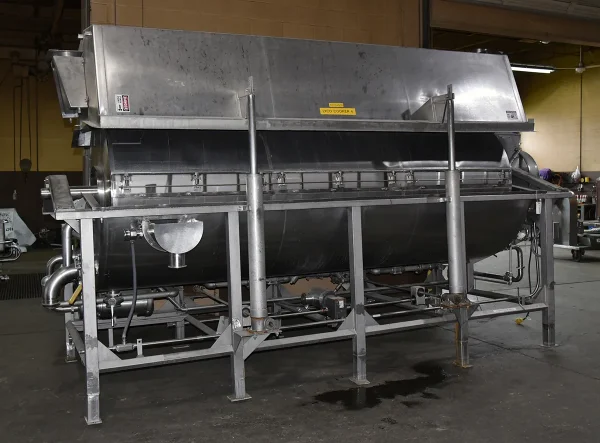
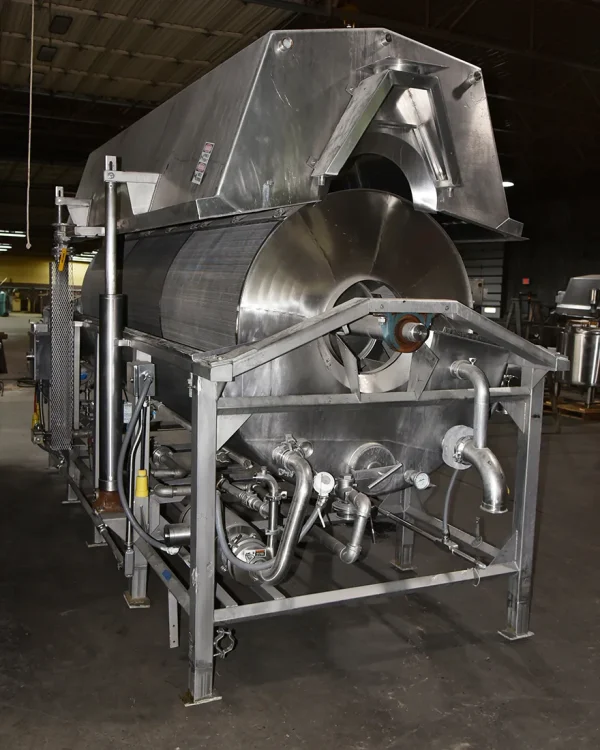
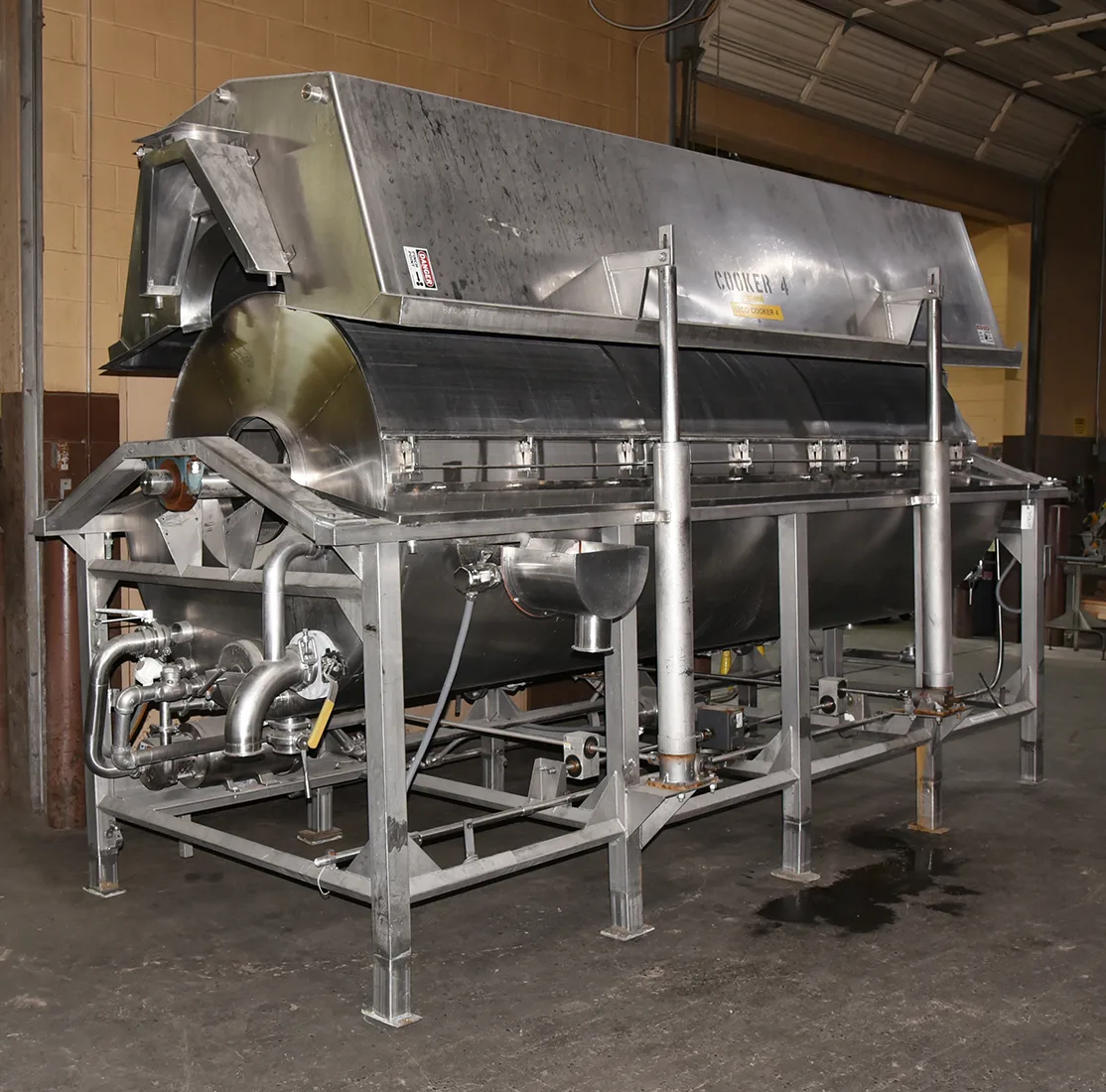
A long inclined drum, perforated along its working length, sits half-submerged in a insulated trough of blanching water heated by direct steam injection or a jacketed section. Product feeds the raised end continuously; drum rotation and internal helical flights convey it through the water in a slow roll, while the tumble turns every piece through the hot zone so no face sits unheated. Residence time — typically one to five minutes by product — is set by drum speed and flight angle, and a discharge screw or lift at the lower end raises product out to draining and cooling. Water recirculates through a filtration loop; temperature control holds the zone within a degree or two of setpoint, because enzyme inactivation curves have no mercy for drift.
Suitable for
Vegetable freezing lines blanching dice, slices and whole small items before IQF — the tumble suits products belts bruise; drying operations inactivating enzymes in root crops and vegetables before dehydrators; cannery and ready-meal lines pre-cooking vegetables to a par-cook spec; large central kitchens blanching component vegetables at production rate; any cut-vegetable stream where enzyme test failures or belt damage are the current state of the blanching step.
Not suitable for
Very fragile products — leafy greens can over-tumble and break even in a drum; check trial runs on your actual product; products needing staged multi-zone blanching with different temperatures along the path, which is belt-and-zone territory; small plants below a few hundred kilos an hour, where a batch kettle with a basket does the same chemistry; and lines without steam or hot water infrastructure sized for continuous blanching duty — this machine’s appetite is real.
Material & compliance
Drum, trough, flights and discharge in SUS304 (EN 1.4301) food-grade finish, fully drainable for cleaning; drive and bearings sealed against water ingress; temperature control with product-probe reference and recording for enzyme-control documentation, since blanching records are a standard audit ask.
Supplied with CE declaration of conformity and DoC on request; material certificate EN 10204 3.1 available for contact parts.
Selection notes
Bring your product spec, not your volume target: the factory needs to run peroxidase trials on your cut sizes because residence time decides both capacity and done-ness. Confirm the heating medium — direct steam injection dilutes the blanch water slowly and adds condensate handling, while indirect heating costs more per kilo but keeps water chemistry stable; your utilities decide. Ask how the drum drains and strips for daily cleaning, because blanch water is where hygiene goes to fail quietly. Check the discharge — a machine that dumps hot product straight onto a belt without drain time hands your cooling step extra work. And match outlet temperature to your cooler in writing; blancher-to-chiller handoffs are where lines quietly lose capacity.
When you should not buy this machine: If your product is robust and your line already runs a belt blancher at spec, the drum buys you gentleness you may not need. And if your real problem is blanch water management or enzyme drift on an existing line, fix the controls and water treatment first — the drum does not cure chemistry, it just carries product through it.
Key specifications
| Parameter | Value |
| Capacity | 1000-3000 kg/h by product and residence (TYPICAL, confirm with factory) |
| Residence time | 1-5 min by drum speed and flight set (TYPICAL) |
| Heating | Direct steam injection or jacketed water zone |
| Drum | Perforated SUS304, internal helical flights |
| Controls | Temperature control + recording, VFD drum drive |
| Contact material | SUS304 (EN 1.4301) |
| Power supply | 380V/3P/50Hz, 5-15 kW class plus steam load |
Specification values are industry-typical ranges for this machine class and are not verified against a specific factory datasheet. Replace them with measured factory data before publication.
FAQ
Drum or belt blancher — how do we choose?
Product fragility decides it: whole or robust cut vegetables run fine on belts and cost less; delicate dice and slices keep yield on the drum’s gentle roll. Run your product on both if the factory offers trials — the yield difference usually pays the price gap on delicate items within a season.
How do we verify the blanch actually works?
The standard check is peroxidase testing on outlet samples each shift — a simple test kit, done on the floor. Your machine’s temperature log backs it up for audits, but the test on product is the control, not the gauge on the wall.
What water treatment does it need?
Blanch water accumulates starch and solids, so filtration or partial bleed plus make-up is standard, with periodic full dumps and cleans. Water quality varies by region, so confirm hardness and treatment needs against your supply rather than assuming the factory default holds.
Related equipment
This unit is one stage of a complete processing line. For the full range of cooking and blanching equipment, or to compare this model against the Continuous Belt Blancher 2500 kg/h, see the complete equipment catalogue. Capacity, material grade and utility requirements can be confirmed through a quote request.
Reviews
There are no reviews yet.