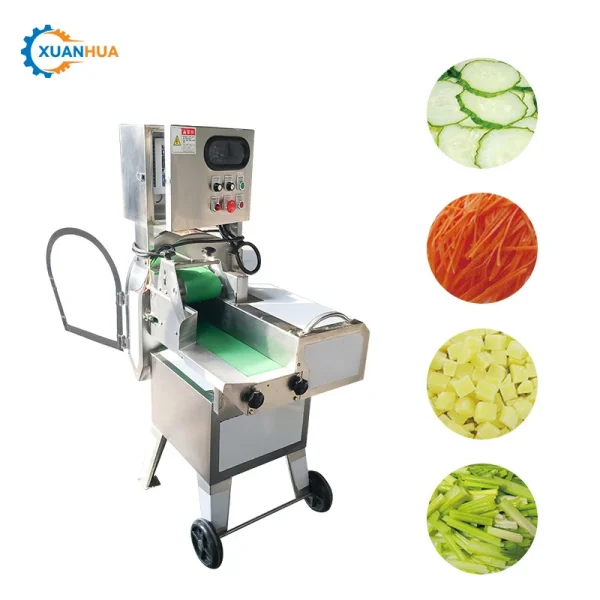
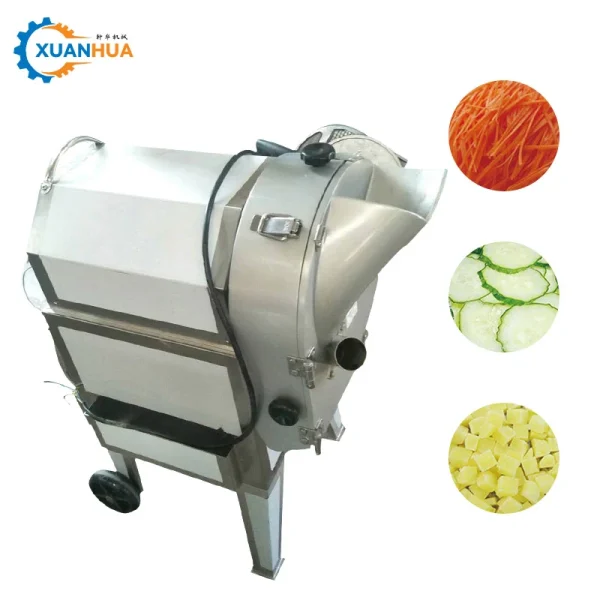
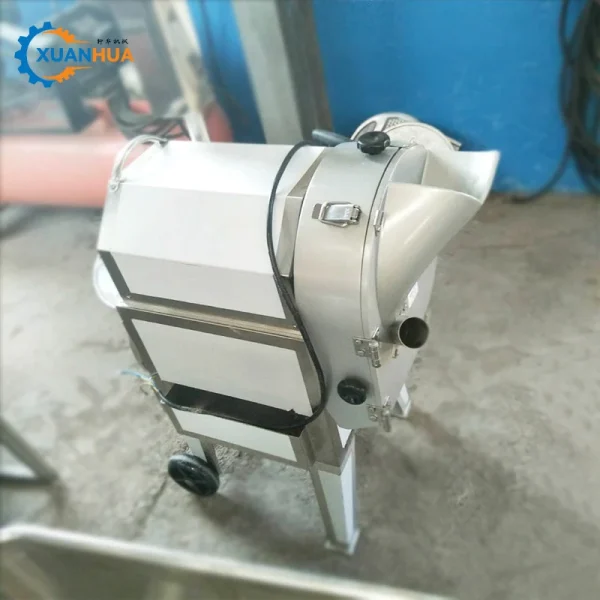
Cassava Slicing Machine 2 t/h
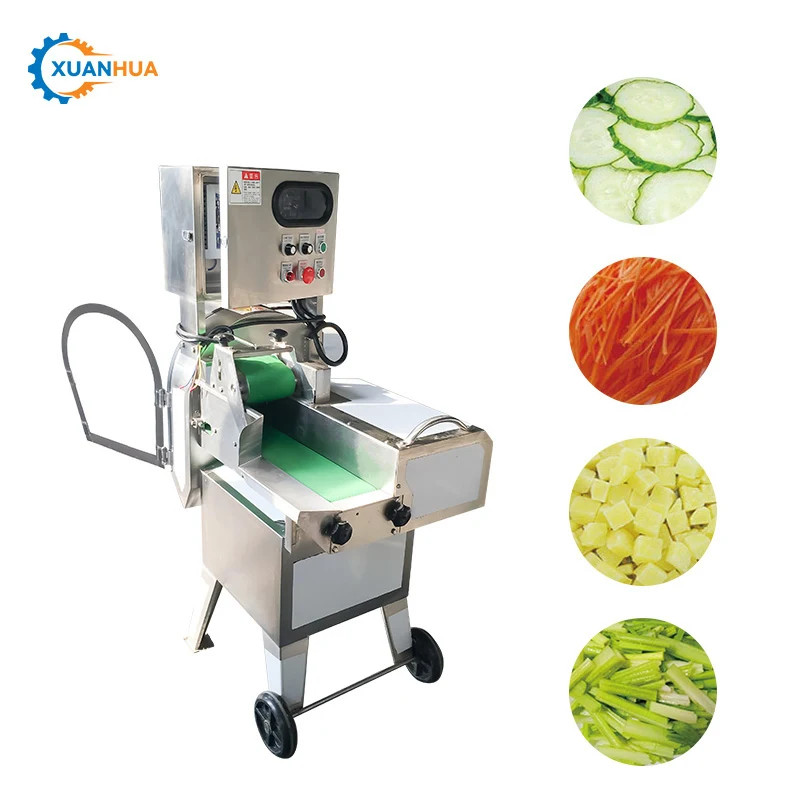
Cassava is the hardest root a vegetable line cuts. Dense, starchy, bleeding cyanide-precursor sap before treatment, and irregular in shape, it dulls ordinary slicers in shifts and punishes uneven cuts downstream — thick chips dry sour, thin ones shatter. A cassava slicing machine is engineered around that hardness: heavy blades, positive feeding and a cut geometry tuned to the chip specification, delivering the uniform first cut on which the whole drying chain’s quality sits.
How it works
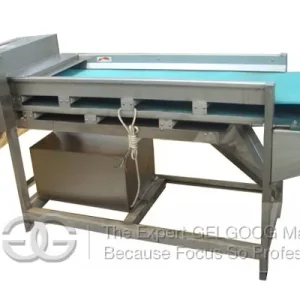
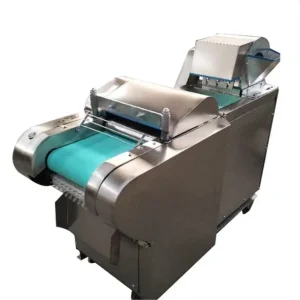
Peeled roots feed into a positive-feed intake — rollers or a screw that grips the hard flesh instead of letting it skate — and pass a heavy knife assembly that slices crosswise at set thickness. Designs divide between disc cutters, where a rotating blade head slices continuous roots, and centrifugal slice heads, where chunks strike blades inside a chamber. Either way the physics is the same: high blade speed, positive hold, and thickness set by blade spacing or feed rate. Cut slices wash immediately downstream, both to stop surface starch browning and to begin the detoxification soak the process standard requires. Thickness is the quality knob — drying time, chip integrity and flour yield all key off it.
Suitable for
Cassava chip producers drying slices for the snack and export chains; cassava flour and garri plants slicing ahead of drying and milling; starch factories feeding rasping lines with pre-cut roots; ethanol and bio-feedstock processors cutting roots for efficient cooking; co-operatives adding value to member cassava at intake.
Not suitable for
Fresh cassava retail, which sells whole roots and needs no slicing capital; unpeeled roots — the cutter assumes peeled or at least topped-and-tailed input, and skin accelerates blade wear; mixed-root lines where cassava is the minority crop, since changeover and blade wear pricing only work at cassava-dominant volume; and buyers without the downstream wash — cut cassava discolors within minutes, and a slicer without its wash stage ships brown product.
Material & compliance
Frame, feed channels and chutes in SUS304 (EN 1.4301) food-grade finish; blades hardened food-safe stainless, heavy section for root hardness, with documented change procedure; positive-feed drives with interlocked access; washdown-safe construction for the sap-heavy environment.
Supplied with CE declaration of conformity and DoC on request; material certificate EN 10204 3.1 available for contact parts.
Selection notes
Bring roots with their hardness in mind: cassava varieties differ in density and fibre, and blade life at your variety is the number that decides running cost. Ask for slices per blade set — a cheap machine that needs blades weekly is expensive monthly. Confirm the chip thickness range against your drying spec, since dryers and fryers downstream assume a window, not a wish. Check the feed intake against your root geometry — forks, bends and oversize roots are the jam source, and the honest trial runs your worst harvest day. And verify the immediate-wash interface: the slicer’s discharge must reach the washer without delay, or browning starts before washing does.
When you should not buy this machine: If your cassava volume is a few bags a day, hand slicing on a firm board with a sharp knife remains the village-standard answer. And if your real product is starch, skip the slicer stage debate — rasping lines accept whole washed roots, and the slicing capital serves nothing.
Key specifications
| Parameter | Value |
| Capacity | 1000-3000 kg/h by root size (TYPICAL, confirm with factory) |
| Slice thickness | 3-10 mm by blade set (TYPICAL) |
| Cutting method | Disc head or centrifugal blade chamber |
| Feed | Positive-feed rollers / screw |
| Contact material | SUS304 (EN 1.4301) |
| Power supply | 380V/3P/50Hz, 3-7 kW class |
Specification values are industry-typical ranges for this machine class and are not verified against a specific factory datasheet. Replace them with measured factory data before publication.
FAQ
Does it handle the detoxification soak too?
No — slicing is mechanical only. The cyanide-precursor reduction happens in downstream soaking, fermentation or cooking stages per your process standard. The machine’s role is a uniform cut that lets those stages run predictably; do not accept any slicing machine marketed as a safety step by itself.
Why do slices need washing immediately?
Cut cassava surfaces oxidise and brown within minutes, and surface starch clouds drying. The wash is part of the slicing stage in practice — plan the layout so discharge falls straight into the washer, and hold that timing in every shift plan.
How does blade life compare with potato slicers?
Cassava is harder and more abrasive; expect meaningfully shorter blade intervals than potato duty at equal tonnage. Get the factory’s tested blades-per-tonne figure on your variety — it is the honest running-cost number, and it varies more between cassava varieties than price varies between machines.
Related equipment
This unit is one stage of a complete processing line. For the full range of cutting and slicing equipment, or to compare this model against the Vegetable Slicing Machine 1200 kg/h, see the complete equipment catalogue. Capacity, material grade and utility requirements can be confirmed through a quote request.
Reviews
There are no reviews yet.