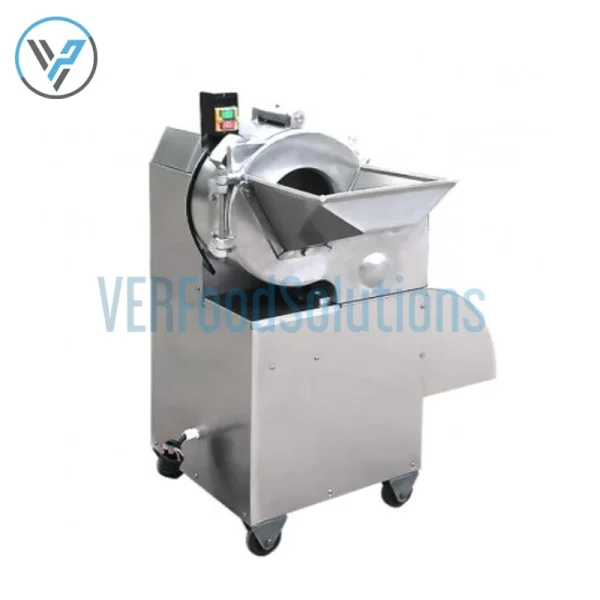
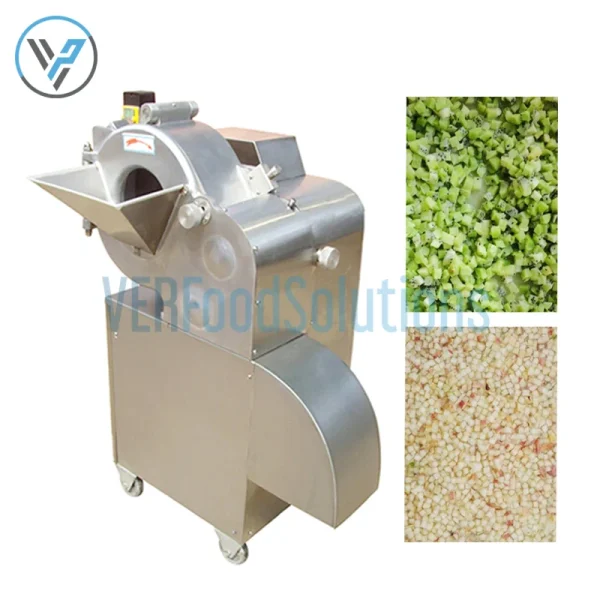
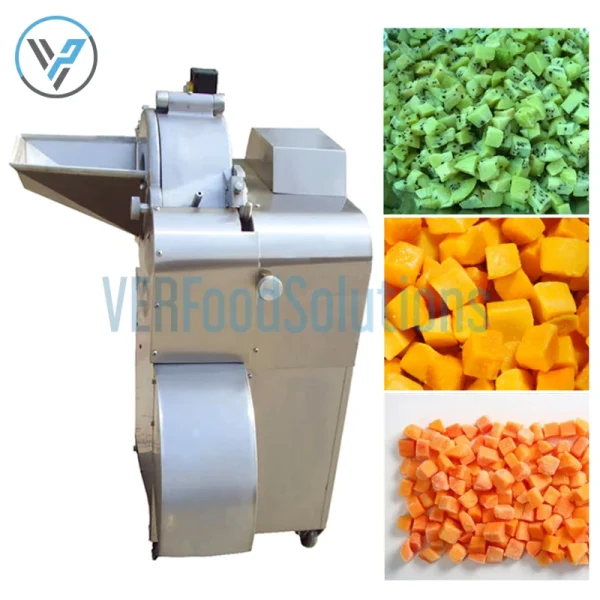
Fruit Dicing Machine 1200 kg/h
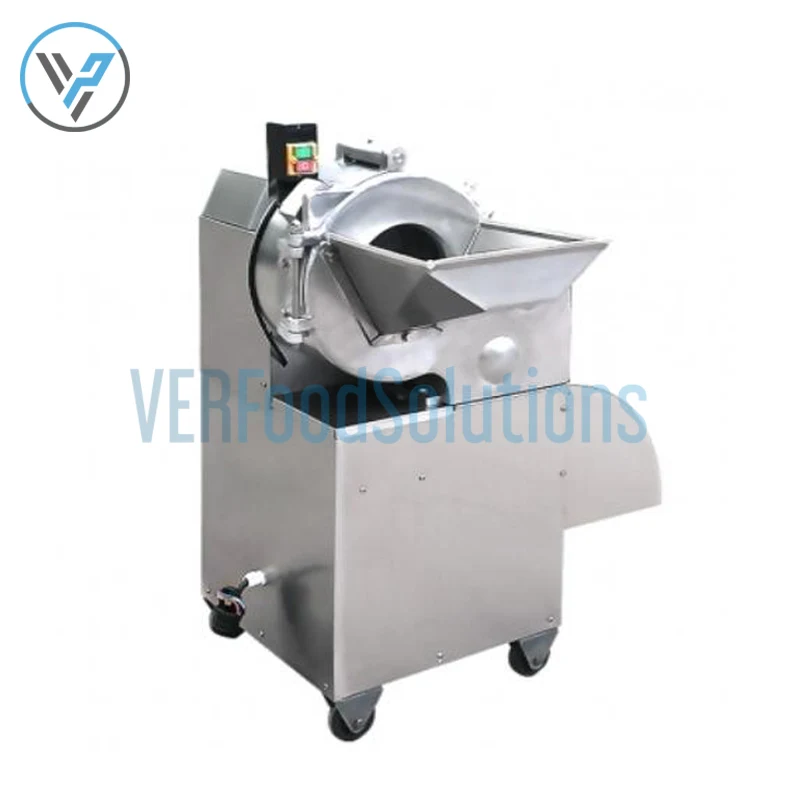
Dicing is the most demanding cut in fruit processing. A cube has six faces, and every one of them shows the blade: crush a soft-fleshed apple and the face glisten with released juice that browns by afternoon; tear a melon cube and it weeps syrup into the pack. Buyers see dice in clear cups and yoghurt bases where every irregular piece reads as quality lost. A fruit dicing machine earns its place with geometry — fruit are pre-cut into slabs, pressed through a strip cutter, then cross-cut into cubes by staggered knives — so each face is sheared, not torn. Cube size is a blade-set and spacer change, holding uniformity across a shift in a way no knife board can.
How it works
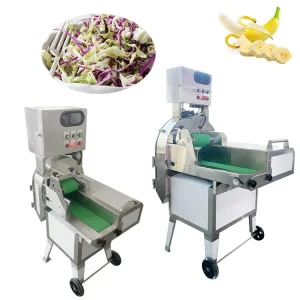
Peeled, cored or rind-removed fruit feed into the slicing head, which cuts them into slabs of the set thickness. Slabs pass under a hold-down and through a strip cutter that divides them into bars; a third, staggered knife row cross-cuts the bars into cubes, and the pieces fall onto an outfeed conveyor or directly into a wash or anti-browning dip. Cube size from 5 to 20 mm is a blade-and-spacer changeover. Soft-fruit kits add gentler hold-down and sharper stagger; stone-fruit kits suit firmer flesh. Feed rate matches the knife cadence so bars never bunch and cubes never double-cut.
Suitable for
Fruit-cup and fruit-salad packers supplying retail clear packs; dairy and yoghurt plants feeding fruit-prep lines; IQF fruit operations dicing ahead of freezing; bakery and cereal producers needing uniform inclusions; salad and ready-meal factories adding fruit components; processors dicing melon, apple, pear, papaya and similar flesh at volume.
Not suitable for
Whole, unpeeled fruit — the machine assumes prepared slabs; berries too soft to hold a cube shape, which belong in pulping or whole-freezing; very fibrous fruit such as pineapple core sections without a blade-set check; and operations needing random rustic cuts for artisanal products — uniform dice is precisely the wrong aesthetic there.
Material & compliance
Cutting heads, blade sets, hold-downs, chutes and frame in SUS304 (EN 1.4301) food-grade finish; blades food-grade stainless with documented sharpening interval; sealed washdown drives; interlocked blade access; tool-free blade-set changeover for sanitation.
Supplied with CE declaration of conformity and DoC on request; material certificate EN 10204 3.1 available for contact parts.
Selection notes
Start with your fruit list: soft melon and firm apple want different hold-down and blade stagger, and the changeover kit list should be quoted, not promised. Ask for a cut-face demonstration — shear quality is the whole product, and it shows in the first hour after cutting. Confirm cube-size changeover time against your production rhythm; plants that switch 10 mm and 15 mm daily need minutes, not an hour. Check the anti-browning interface: dice needs to reach dip or freezer fast, so outfeed height and conveyor speed matter. And verify throughput at your flesh firmness, not the nameplate, because soft fruit feeds slower than the brochure suggests.
When you should not buy this machine: If your dice volume is under 50 kg a day, a bench dicing attachment on your existing slicer covers it. And if your product is purée, jam or juice, skip dicing entirely — the cut adds cost to a product that ends homogenized.
Key specifications
| Parameter | Value |
| Capacity | 500-2000 kg/h by fruit firmness (TYPICAL, confirm with factory) |
| Cube size | 5-20 mm via blade sets (TYPICAL) |
| Cut principle | Slice-strip-cross three-axis shearing (TYPICAL) |
| Fruit prep | Peeled and cored slabs infeed (TYPICAL) |
| Contact material | SUS304 (EN 1.4301) |
| Power supply | 380V/3P/50Hz, 1.5-4 kW class |
Specification values are industry-typical ranges for this machine class and are not verified against a specific factory datasheet. Replace them with measured factory data before publication.
FAQ
Which fruits dice best in this machine class?
Firm-fleshed fruit — apple, pear, melon, papaya, mango at proper ripeness — dice cleanly; soft fruit such as strawberry or peach needs gentler kits and slower feed, and some lots belong in pulping instead. Get a cut test on your fruit list, at your ripeness, before committing to one machine for all of them.
How does the machine handle browning?
The machine does not — the process does. Dice must reach an anti-browning dip, a blanch or the freezer within minutes of cutting, which is why outfeed geometry and dip positioning belong in the layout conversation. Ask the supplier to quote the dip conveyor as part of the line rather than leaving it as your retrofit.
What maintenance do the blade sets need?
Sharpening on a schedule that shortens with sugar and acid load — typically daily wiping and periodic sharpening or replacement depending on volume (TYPICAL). Stock at least one spare blade set per cube size, confirm the supplier’s sharpening service or local capability, and log blade changes: dull blades show up in pack quality before anyone sees the edge.
Related equipment
This unit is one stage of a complete processing line. For the full range of cutting and slicing equipment, or to compare this model against the Vegetable Dicing Machine 1500 kg/h, see the complete equipment catalogue. Capacity, material grade and utility requirements can be confirmed through a quote request.
Reviews
There are no reviews yet.