Fruit Juice Evaporator
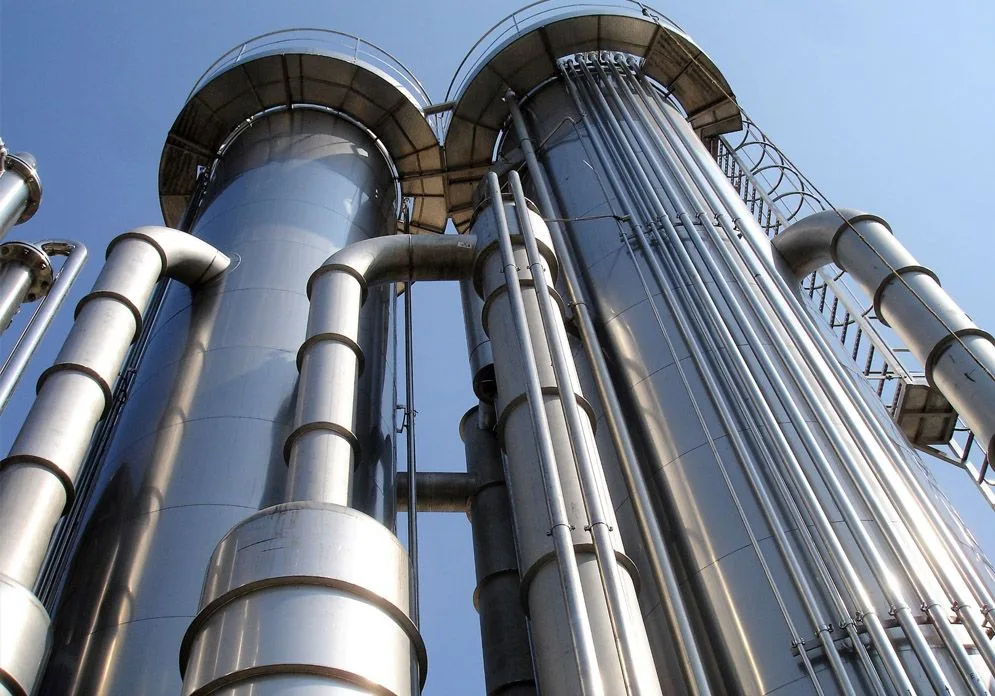
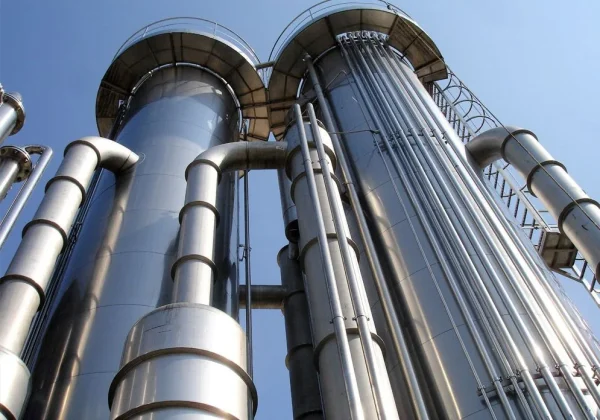
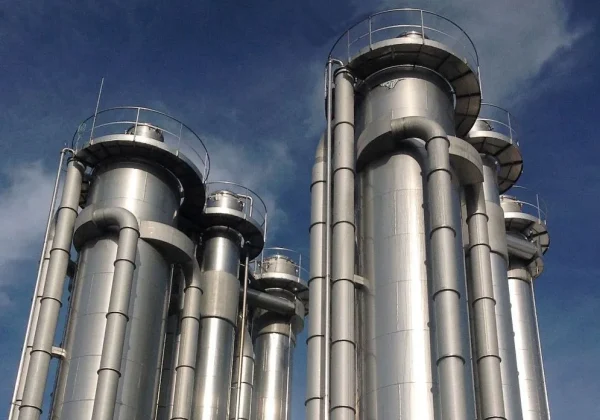
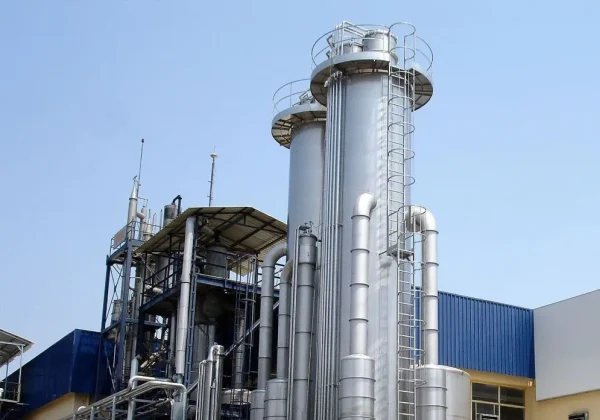
Multi-effect falling film evaporator that removes water from clarified juice under vacuum, concentrating it for storage, transport and further processing.
How it works
Clarified juice is distributed as a thin film down the inside of vertical tubes in an effect. Steam or vapour heats the outside of the tubes, water evaporates from the film, and the vapour from the first effect is used to heat the second, which runs at lower pressure — so each kilogram of steam removes several kilograms of water. Concentrate is drawn off at the target solids, and the vapour is condensed. Volatile aroma compounds stripped during evaporation are recovered in an aroma recovery section and dosed back into the concentrate.
Running under vacuum keeps the boiling temperature low, which is what protects colour and flavour in a fruit concentrate.
Suitable for
Apple, pear and berry juice concentration; tomato concentrate and paste; citrus juice where aroma recovery is part of the product specification; plants reducing transport volume; product where the concentrate is the traded form.
Not suitable for
Pulpy or high-pulp juice without pre-clarification, which fouls the tubes; very low volumes where the capital and steam infrastructure do not pay; product whose aroma cannot be recovered adequately; operations without steam and cooling water at the required rates.
Material & compliance
Tubes, shells, separator and piping in SUS304 (EN 1.4301); SUS316L (EN 1.4404) on request for acidic product. System designed for CIP; aroma recovery condenser and dosing documented; vacuum and condensate systems specified for the duty.
Supplied with CE declaration of conformity and DoC on request; material certificate EN 10204 3.1 available for contact parts. Food-contact elastomers can be supplied to FDA 21 CFR 175 where required.
Selection notes
Start from the solids you must reach and the aroma you must keep — those two decide the effect count and whether recovery is fitted. Ask for steam consumption per kilogram of water removed, not a headline feed rate. Check CIP design carefully: evaporation surfaces foul, and a plant that cannot be cleaned properly loses capacity every day it runs.
When you should not buy this machine: If your juice is cloudy or pulpy by design, clarify first or choose a different concentration route — a falling film evaporator will foul on pulp. Also skip it at low volume: multi-effect evaporation is an economy of scale, and below a certain tonnage the steam and capital cost per kg is worse than simpler options.
Key specifications
| Parameter | Value |
| Feed rate | 1000-50000 L/h feed by model (TYPICAL, confirm with factory) |
| Concentration range | Up to 65-72 °Bx by product (TYPICAL) |
| Evaporation principle | Multi-effect falling film under vacuum (TYPICAL) |
| Operating temperature | Low, by effect and vacuum (TYPICAL) |
| Aroma recovery | Integrated aroma recovery available (TYPICAL) |
| Contact material | SUS304 (EN 1.4301); SUS316L on request |
| Power supply | 380V/3P/50Hz or 415V/3P/50Hz, customizable |
Specification values are industry-typical ranges for this machine class and are not verified against a specific factory datasheet. Replace them with measured factory data before publication.
FAQ
Why multi-effect rather than single?
Steam economy. Vapour from one effect heats the next at lower pressure, so each kilogram of purchased steam removes several kilograms of water. More effects cost more capital and save more steam.
Do I lose aroma during concentration?
Yes, and that is why aroma recovery is fitted. Volatiles strip off with the water vapour; a recovery section condenses them so they can be dosed back.
How do I know when to clean?
By falling evaporation rate and rising temperature difference across an effect. Fouling shows up as capacity loss before it shows up as a quality problem.
Related equipment
This unit is one stage of a complete processing line. For the full range of pulping and juicing equipment, or to compare this model against the Fruit Pulper & Refiner 2000 kg/h, see the complete equipment catalogue. Capacity, material grade and utility requirements can be confirmed through a quote request.
Reviews
There are no reviews yet.