Onion Drying Machine 1000 kg/h
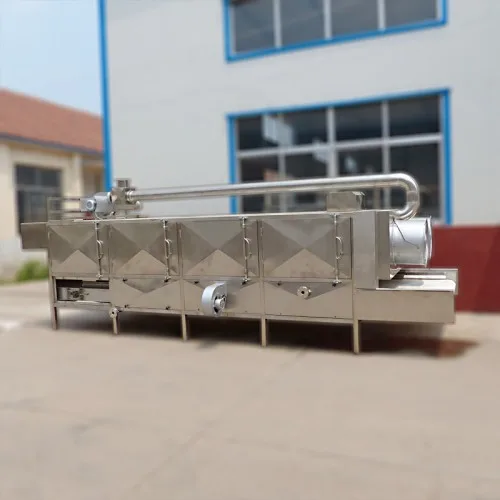
Dehydrated onion is a commodity traded on pungency and colour, and both are decided in the dryer. Overheat onion and its sulphur compounds — the entire value of the product — degrade along with the colour, turning white-gold flakes brown. An onion dryer is therefore a temperature-discipline machine: staged heat, high at first while free water evaporates, low at the end while bound water leaves and the pungency survives.
How it works
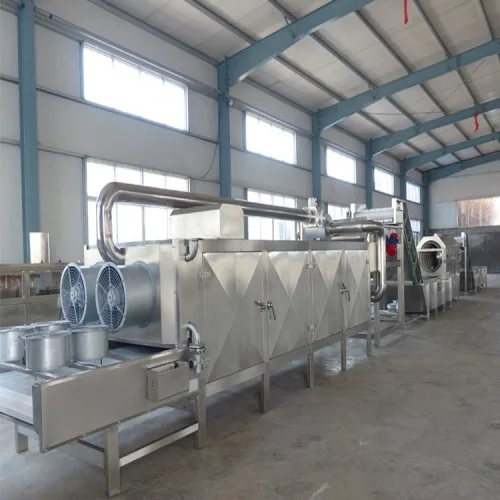
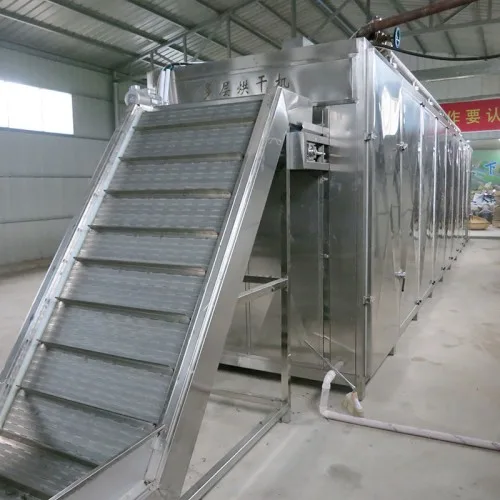
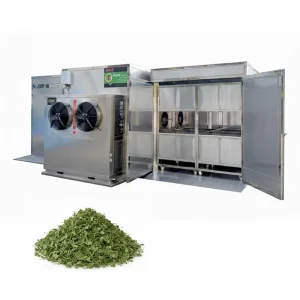
Sliced or diced onion enters the dryer on a mesh belt and moves through a multi-stage hot-air circuit. Early stages run hotter air across the wet product, evaporating surface water fast; middle stages hold moderate temperature as moisture migrates from the piece’s core; final stages run the coolest air of the profile, finishing the last few points of moisture gently. Airflow direction typically reverses between stages to even out the drying. Exhaust air leaves through the top, carrying the moisture load; the humidity of exhaust air is the process’s report card, and dryers worth buying monitor it. Total residence time runs several hours — onion dries slowly and cannot be rushed without browning. At discharge, flakes cool before packing, since packing warm product condenses water in the bag and undoes the drying.
Suitable for
Dehydrated onion slice, dice and granule production for the food-ingredient trade; garlic flake drying on the same profile range; integrated onion operations adding value to grading rejects and oversize; spice and ingredient processors drying other alliums and similar vegetables within the temperature range.
Not suitable for
Onion paste or high-moisture products needing concentration rather than drying — an evaporator or drum dryer fits; producers without upstream slicing and washing capacity, because the dryer is one step of a chain and the worst purchase is the middle step of a chain you do not have; anyone drying at raw-material cost without checking the dehydrated-onion market price first — the margin is in the trading, not the drying.
Material & compliance
Belt, chamber, product guides and discharge in SUS304 (EN 1.4301); insulation on all heated surfaces to protect both energy and operators. Heating by gas, electric or steam coil, with over-temperature protection — onion dust in a hot air circuit is a genuine fire risk and cleanable duct design is a safety feature, not a convenience. Belt speed adjustable per stage. Exhaust fans sized to the moisture load.
Supplied with CE declaration of conformity and DoC on request; material certificate EN 10204 3.1 available for contact parts.
Selection notes
Ask for the temperature profile the supplier recommends for onion and whether each stage is independently controlled — single-zone dryers dry onion into brown, cheap product. Ask for energy consumption per kilogram of finished flake; over a season this number dominates cost per tonne. Check belt access and cleaning design — onion residue ferments and a dryer that cannot be cleaned will poison a batch eventually. Check discharge cooling arrangement. And check the exhaust path against condensation on your building.
When you should not buy this machine: If your product is fresh onion and the dehydrated trade is someone else’s, this machine adds nothing. And if your volume is a few hundred kilograms of fresh input a day, a cabinet tray dryer does the same job smaller; buy the continuous belt when the volume justifies walking past it.
Key specifications
| Parameter | Value |
| Fresh input capacity | 500-2000 kg/h by belt area (TYPICAL, confirm with factory) |
| Drying stages | 3-5 zones with independent temperature control (TYPICAL) |
| Temperature range | 50-90 °C profile, onion-tuned (TYPICAL) |
| Final moisture | 6-8 % for dehydrated trade (TYPICAL) |
| Residence time | 3-8 h by slice thickness (TYPICAL) |
| Heating | Gas, electric or steam coil |
| Contact material | SUS304 (EN 1.4301) |
| Power supply | 380V/3P/50Hz or 415V/3P/50Hz, customizable |
Specification values are industry-typical ranges for this machine class and are not verified against a specific factory datasheet. Replace them with measured factory data before publication.
FAQ
Why multi-stage instead of one hot zone?
Because onion is two products in one drying cycle: wet material that tolerates high heat, and nearly-dry material that browns under it. Staged temperature dries fast early and gently late, which is how pungency and colour both survive. Single-zone dryers compromise, and the compromise shows up in the price the finished flakes fetch.
What moisture should finished onion reach?
The dehydrated trade standard is 6-8 % — low enough for shelf stability, not so low that the flake shatters into powder in handling. Confirm your buyer’s specification and dry to it; drying further than the contract needs costs energy and yield for nothing.
Can it dry garlic and other vegetables?
Within the allium family, largely yes — garlic flake runs on a similar profile. Broader vegetable drying works if the temperature range and belt loading suit, but check each product’s profile with the supplier rather than assuming one dryer is universal.
Related equipment
This unit is one stage of a complete processing line. For the full range of drying and dehydration equipment, or to compare this model against the Belt Hot Air Dryer 1 t/h 30 kW, see the complete equipment catalogue. Capacity, material grade and utility requirements can be confirmed through a quote request.
Reviews
There are no reviews yet.