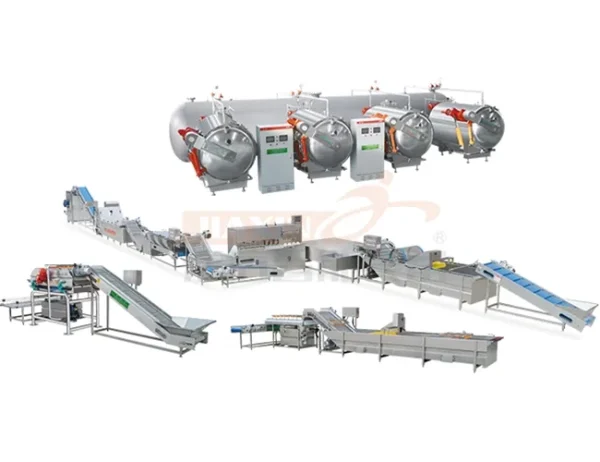


Vacuum Puffing Machine 100 kg/batch
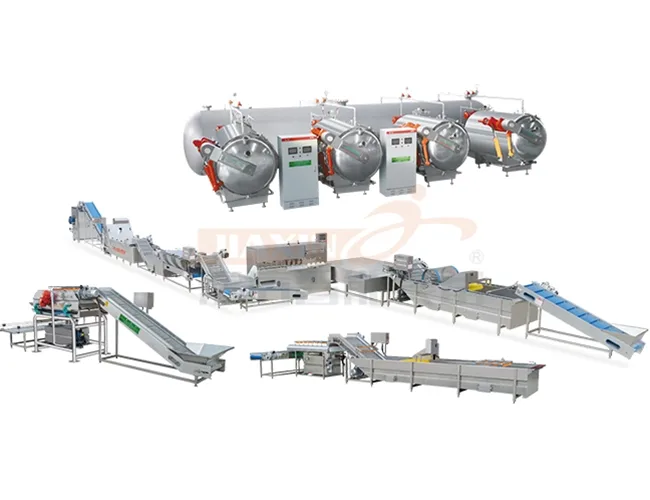
Puffed apple crisps look like magic and run on physics: water trapped inside a dried fruit piece, flash-boiled by a sudden pressure drop, expands and blows the piece’s structure open from within — a crisp shell with a honeycomb core, made without frying oil. The vacuum puffer is the pressure vessel that does this in controlled batches, and it has quietly become the machine behind most fruit-crisp snacks that advertise ‘no added oil’.
How it works
The cycle runs in three stages inside a sealed vessel. First, pre-dried pieces (typically 15-25 % moisture after an upstream drying step) are heated under pressure — steam or oil jacket heat brings the piece’s interior water to a pressurised boil without boiling. Then the pressure is released into vacuum in a second or two: the superheated water inside each piece flashes to steam, volume expands many-fold, and the piece’s cellular structure puffs open. Finally the vacuum stage continues as a low-temperature drying phase, pulling the remaining moisture out of the now-porous structure until the crisp hits 3-5 % moisture. Cycle time runs 30-90 minutes depending on product and vessel load.
The pre-drying step is not optional — puffing works on residual water, and the pre-dry level is where crispness is actually decided. The vessel does the drama; the upstream dryer does the quality.
Suitable for
Apple, pear, pumpkin, carrot, potato and banana crisp snacks positioned on no-oil or clean-label claims; snack producers diversifying from fried lines into a premium no-oil segment; processors with existing drying capacity looking for a value-added product from the same fruit; operations selling into health-retail channels where low-temperature processing is part of the product story.
Not suitable for
High-moisture raw fruit straight from the wash — puffing needs pre-dried input, and buying the vessel without the upstream dryer is buying half a process; products where puffing ruins the texture (most berries and anything gel-like); very large continuous volumes, where batch vessels and their changeovers cap throughput; buyers unwilling to certify and inspect a pressure vessel, because this machine is one, and the paperwork is not optional.
Material & compliance
Vessel built and certified to pressure equipment rules applicable in the installation market — this is the first document to ask for, ahead of any performance claim. Product baskets and vessel interior in SUS304 (EN 1.4301); SUS316L where acidic fruit is run. Vacuum pump, condenser and its cooling water sized to the vessel’s vapour load — undersized here stretches every cycle. Heating via steam or thermal oil jacket with full instrumentation: pressure, temperature, vacuum, cycle logging.
Supplied with CE declaration of conformity and DoC on request; material certificate EN 10204 3.1 available for contact parts.
Selection notes
Ask for the pressure vessel certificate and design parameters first — everything else follows from a legal vessel. Ask what pre-dry moisture the puffing recipe assumes, and whether the supplier quotes the upstream dryer or assumes you have one. Ask for finished-product samples from the actual vessel size you are buying, not from a lab unit — puffing quality scales. Check cycle time against your volume honestly, including loading, unloading and changeover. Check how the vessel is cleaned between fruit types.
When you should not buy this machine: If your snack is sold on fried texture, puffing makes a different product — taste both before committing, they are not substitutes. And if you cannot support pressure-vessel inspection, do not buy one at any price; it is a regulated machine class and the regime is part of the cost.
Key specifications
| Parameter | Value |
| Batch capacity | 50-200 kg/batch by vessel size (TYPICAL, confirm with factory) |
| Cycle time | 30-90 min including vacuum drying (TYPICAL) |
| Puffing pressure | 0.2-0.8 MPa working pressure (TYPICAL) |
| Vacuum level | About -0.09 MPa drying phase (TYPICAL) |
| Input moisture | 15-25 % pre-dried product (TYPICAL) |
| Final moisture | 3-5 % crisp (TYPICAL) |
| Contact material | SUS304 (EN 1.4301); SUS316L on acidic fruit |
| Power supply | 380V/3P/50Hz or 415V/3P/50Hz, customizable |
Specification values are industry-typical ranges for this machine class and are not verified against a specific factory datasheet. Replace them with measured factory data before publication.
FAQ
Is puffed really different from fried?
Structurally, yes. Fried crisps take fat into the surface and cook by immersion; puffed crisps have no added fat and get their texture from internal steam expansion. The eating experience differs — puffed is airier, less greasy — and so does the label claim. Decide by product positioning, not by which process sounds newer.
Why does pre-drying matter so much?
Because the puff is powered by water, and the amount of water left in the piece decides whether it puffs into a crisp or collapses into a leather. The pre-dry moisture window is the single most important process parameter, and it belongs to the upstream dryer, not the vessel.
Can one vessel run different fruits?
Yes, with recipe changes (pressure, heating profile, vacuum hold) and cleaning between types. The vessel is general-purpose; the recipe book is what you are really buying with the supplier’s process support.
Related equipment
This unit is one stage of a complete processing line. For the full range of cooking and blanching equipment, or to compare this model against the Vacuum Frying Machine 200 kg/h, see the complete equipment catalogue. Capacity, material grade and utility requirements can be confirmed through a quote request.
Reviews
There are no reviews yet.