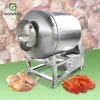
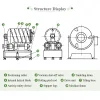
Vacuum Tumbler 1500 L
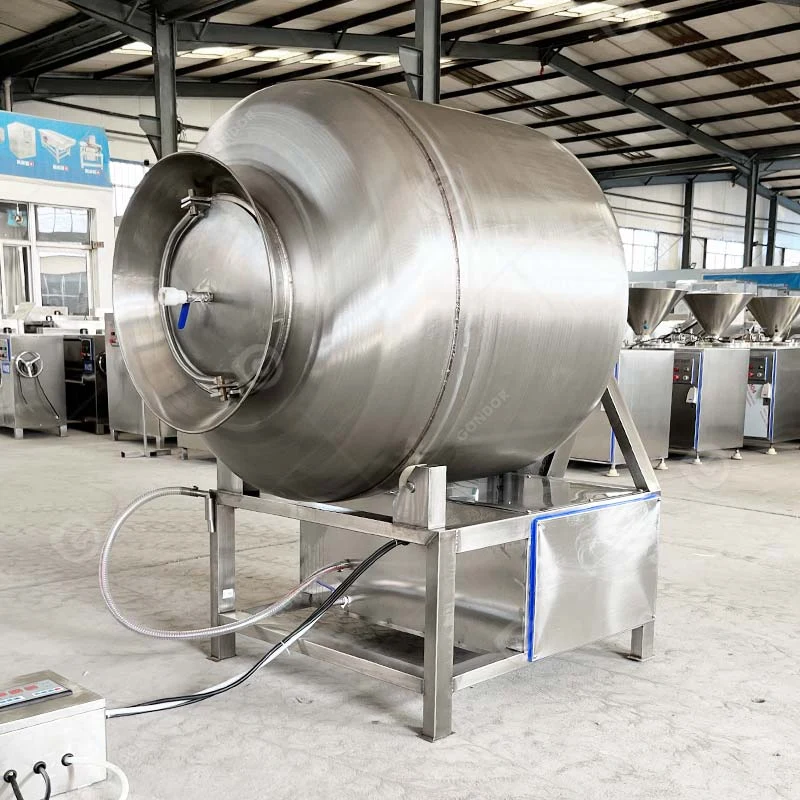
Marinade and brine move into vegetable tissue slowly at atmospheric pressure — hours of soaking, stirring and hoping. The vacuum tumbler speeds that transfer with physics: product tumbles in a rotating drum while a vacuum opens the tissue’s structure, letting liquid penetrate in minutes instead of hours, and the tumbling massage distributes it evenly instead of pooling it in corners. It is the pickled-products line’s answer to the question every plant eventually asks: why does the soak take all night?
How it works
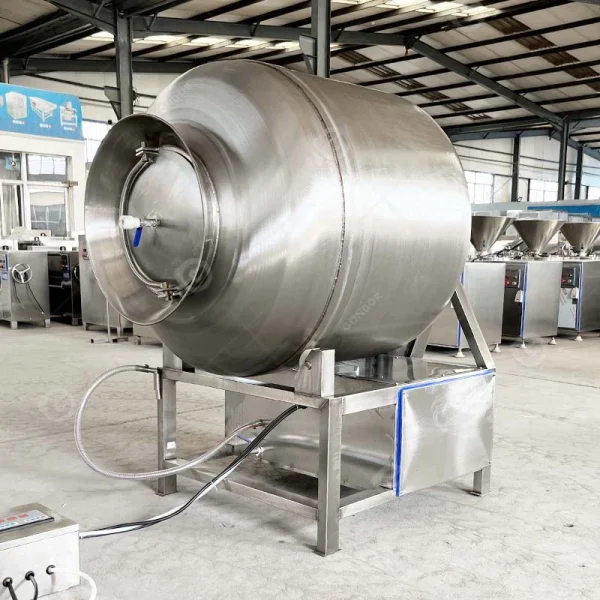
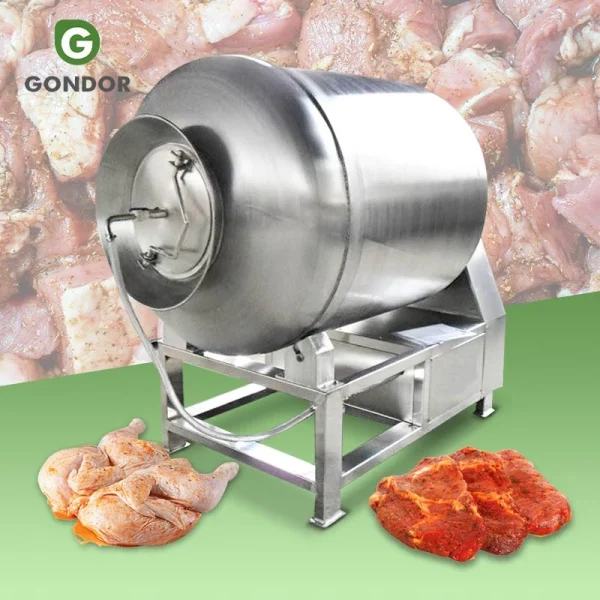
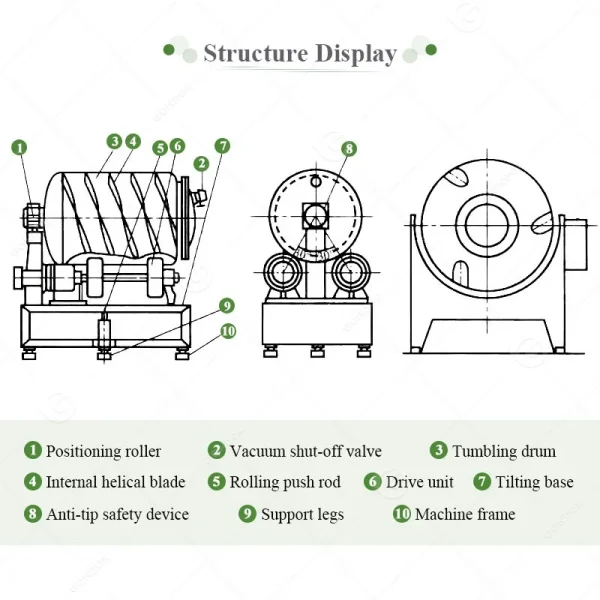
Product and brine or marinade load the horizontal drum to its working fill. The lid seals and the vacuum pump draws the chamber down — typically to around -0.08 MPa — while the drum rotates at slow speed; fixed ribs inside tumble and massage the product, opening tissue structure so liquid infiltrates throughout. Cycle parameters — vacuum level, rotation speed, rest phases, total time — run as recipes, because different products take liquid at different rhythms and over-tumbling bruises. At cycle end the vacuum releases in a controlled breath, the drum stops at a discharge position, and product exits evenly penetrated, ready for fermentation, cooking or packing. The whole drum washes out through a full-diameter opening.
Suitable for
Pickled-vegetable lines accelerating brine uptake in cucumber, radish and cabbage products before fermentation or packing; ready-to-cook vegetable and plant-based products taking marinade evenly at production rate; kimchi and fermented-food plants standardizing salt and seasoning distribution ahead of tank fermentation; central kitchens marinating components on service schedules; any process where overnight soaking is the current bottleneck and even penetration is the quality bar.
Not suitable for
Dry seasoning and coating, which belongs to coating drums and seasoning systems; fragile berries and leafy products that bruise under any tumbling; continuous line flow — the tumbler is batch by nature, and a line that cannot pause needs a different concept; and plants without washdown discipline around brine, because marinade residue is corrosive and hygiene-critical.
Material & compliance
Drum, ribs, lid and product-contact parts in SUS304 (EN 1.4301) food-grade finish; vacuum system with food-rated pump and condensate handling; controls with recipe storage for vacuum level, rotation speed, rest phases and cycle time; sealed lid with safety interlocks for rotating-under-vacuum duty.
Supplied with CE declaration of conformity and DoC on request; material certificate EN 10204 3.1 available for contact parts; vacuum pump and system documentation per suppliers.
Selection notes
Size the drum on your batch, not the average day: working fill is roughly half the nominal volume, and your biggest marinade batch should fit with room to tumble. Ask for uptake trials on your product and brine — time-to-target-penetration is the number that replaces the overnight soak, and it varies more between products than between machines. Confirm recipe flexibility: vacuum level, rotation, rest phases and total time all belong in the recipe, not on a fixed program. Check the discharge position and height against your next step in the layout. And verify the vacuum pump’s tolerance to brine vapour — pumps that hate your marinade will tell you in maintenance costs within a quarter.
When you should not buy this machine: If your products marinade happily overnight without costing the schedule anything, the tumbler buys speed you do not need. And if your real goal is even coating rather than penetration, a seasoning drum costs less and does that job better.
Key specifications
| Parameter | Value |
| Drum volume | 500-3000 L nominal, ~50% working fill (TYPICAL, confirm with factory) |
| Vacuum level | To approx. -0.08 MPa (TYPICAL) |
| Cycle | Recipe control: vacuum, rotation, rest phases, time |
| Discharge | Rotary to position, full-diameter door |
| Contact material | SUS304 (EN 1.4301) |
| Power supply | 380V/3P/50Hz, 3-10 kW class by size |
Specification values are industry-typical ranges for this machine class and are not verified against a specific factory datasheet. Replace them with measured factory data before publication.
FAQ
How much faster is vacuum uptake than soaking?
Commonly minutes against hours — but the honest figure comes from a trial on your product and brine, because uptake depends on tissue structure and brine strength. Ask the factory to run your recipe; the measured time-to-target is the purchase argument.
Does tumbling damage the product?
At the right recipe, no — slow rotation with rest phases massages rather than batters. Fragile products bruise at aggressive settings, which is why recipe control matters more than drum size. Validate settings on your most delicate product first.
What does the vacuum system need in service?
A food-rated pump tolerant of brine vapour, condensate handling, and scheduled pump maintenance — the vacuum kit is the machine’s running heart. Confirm the pump spec against your brine chemistry before the order, not after the first service call.
Related equipment
This unit is one stage of a complete processing line. For the full range of cooking and blanching equipment, or to compare this model against the Kimchi Fermentation Tank 2000 L, see the complete equipment catalogue. Capacity, material grade and utility requirements can be confirmed through a quote request.

Reviews
There are no reviews yet.