
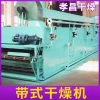
Infrared Dryer 300 kg/h
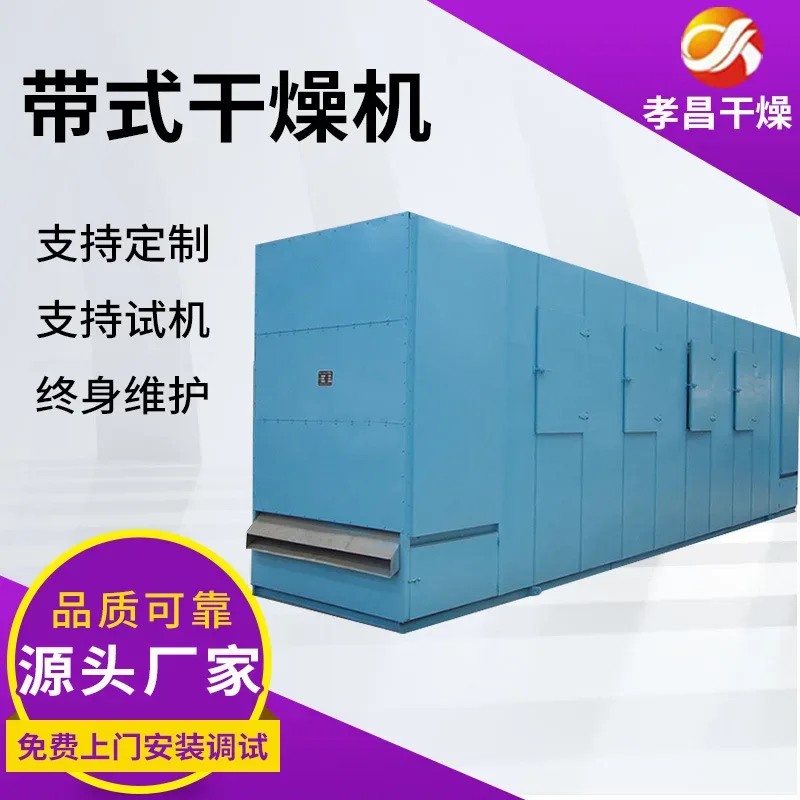
Drying unit that heats product by radiation rather than by hot air. The energy goes into the product surface directly, so the surface reaches temperature quickly without waiting for a large air volume to be heated first. For thin layers, that means shorter machines and shorter residence times.
How it works
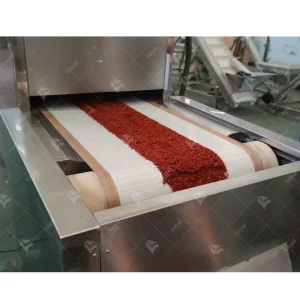
Product is spread in a single layer on a conveyor belt that passes beneath a bank of infrared emitters. Radiation is absorbed at the surface and conducted inward, driving moisture to the surface where a stream of air — either ambient or heated — carries it away. Emitters are usually zoned along the belt so the intensity can be reduced as the product dries and becomes less tolerant of heat.
Emitter wavelength is the main specification. Short-wave emitters respond fast and suit surface drying and thin layers; medium and long-wave emitters penetrate a little more and are gentler on colour. Most drying applications combine infrared with a circulating air section, because radiation alone supplies the heat but does not remove the vapour.
Suitable for
Sliced vegetables and fruit where a short, high-intensity drying stage improves colour retention; herbs and leafy material where surface moisture goes quickly; product that needs a surface crust or a colour set before a conventional dryer finishes it; lines where floor space is limited and a shorter machine is worth the electricity cost; pre-drying ahead of a belt dryer to raise throughput of the existing equipment.
Not suitable for
Thick or dense pieces, where radiation only heats the surface and the core lags; heat-sensitive product that discolours above a modest surface temperature; product with a very high initial moisture content, where the energy cost of evaporating water by radiation is hard to justify; plants where electricity is expensive relative to steam or gas — infrared is clean and fast, not cheap per kilogram of water removed.
Material & compliance
Belt, frame and product contact parts in SUS304 (EN 1.4301); emitter housings must be ventilated and shielded, and the emitter surface is hot enough to ignite residue, so clean-out access is part of the hygiene design, not an afterthought. Emitter guards and a belt-stop interlock on door opening.
Supplied with CE declaration of conformity and DoC on request; material certificate EN 10204 3.1 available for contact parts.
Selection notes
Ask which wavelength the supplier recommends for your product and why — the answer tells you whether they have run it. Ask for the energy figure in kWh per kilogram of water removed, not per kilogram of product, because that is the only way to compare against a hot-air dryer. Check how the belt is cleaned, since residue on a belt under an emitter is both a fire risk and a quality defect.
When you should not buy this machine: If you are drying thick pieces or bulk volumes of high-moisture product, infrared is the wrong heat source — buy belt hot-air capacity instead. And if your electricity tariff is high, the speed advantage will not pay for itself; it pays where product quality or floor space is the constraint, not where energy cost is.
Key specifications
| Parameter | Value |
| Capacity | 100-500 kg/h feed, strongly product-dependent (TYPICAL) |
| Emitter type | Short-wave, medium-wave or long-wave by product |
| Belt width | 0.6-1.6 m (TYPICAL) |
| Residence time | 5-30 min by product (TYPICAL) |
| Product layer | Single layer, 5-25 mm (TYPICAL) |
| Contact material | SUS304 (EN 1.4301) |
| Power supply | 380V/3P/50Hz or 415V/3P/50Hz, customizable |
Specification values are industry-typical ranges for this machine class and are not verified against a specific factory datasheet. Replace them with measured factory data before publication.
FAQ
Does infrared dry from the inside out?
No. It heats the surface and the heat conducts inward. That is why it suits thin layers; on thick pieces the surface overcooks before the centre dries.
Why combine it with hot air?
Because radiation supplies heat but does not remove vapour. Without an air stream, the moisture leaving the product sits in a saturated boundary layer and the drying rate collapses.
Is it cheaper to run than a hot-air dryer?
Per kilogram of water removed, usually not. What it offers is speed, a shorter machine and, on some products, better colour. The comparison has to be made on your product and your energy prices.
Related equipment
This unit is one stage of a complete processing line. For the full range of drying and dehydration equipment, or to compare this model against the Belt Hot Air Dryer 1 t/h 30 kW, see the complete equipment catalogue. Capacity, material grade and utility requirements can be confirmed through a quote request.
Reviews
There are no reviews yet.