Pumpkin Drying Machine 300 kg/h
Pumpkin dries sweet and punishes haste. The flesh is sugar-rich and dense; dried too hot or too fast, surfaces case and caramelize while centers hold moisture, and the batch spoils in storage months later. A pumpkin drying machine manages that profile with staged hot-air drying — moderate zones that remove surface water gently, warmer stages that finish the center, and airflow tuned to dice geometry — so the exit product is the uniform, deep-orange dice that powder mills, soup mixers and snack chains specify.
How it works
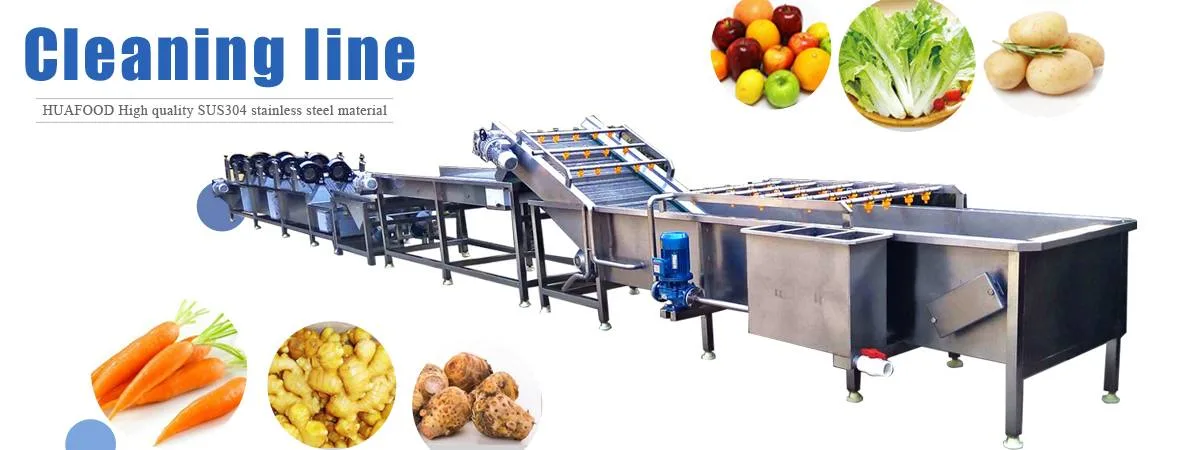
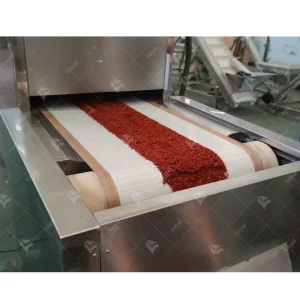
Prepared pumpkin dice or slices spread in even layers onto a mesh conveyor that carries them through a multi-zone drying chamber. Each zone holds its own temperature and airflow direction: early stages run moderate air that strips surface moisture without case-hardening, later stages run warmer air that drives center moisture out along the gradient the early zones prepared. Air passes through the product bed, not merely across it, and recirculation returns heat while humidity purges to exhaust. Belt speed sets bed depth and dwell; exit moisture is the specification — usually single-digit percent for shelf-stable dice — and zone settings are logged per batch for HACCP and repeatability.
Suitable for
Dried-pumpkin dice producers feeding soup, porridge and snack-mix chains; pumpkin powder mills whose grinding needs crisp, low-moisture feed; pet-food and health-food processors using pumpkin at volume; squash and sweet-potato lines sharing the same drying physics; co-operatives converting seasonal gluts into shelf-stable value.
Not suitable for
Whole-pumpkin drying, which needs cutting and deseeding first — the dryer assumes prepared dice or slices; freeze-dried pumpkin, whose market commands a different process and price entirely; very small volumes where a cabinet tray dryer holds the batch economics better; and buyers without humidity management downstream — dried dice reabsorb moisture fast, and packing is part of the drying spec, not an afterthought.
Material & compliance
Chamber, belt and product contact surfaces in SUS304 (EN 1.4301) food-grade finish; food-grade mesh belt with sealed washdown drives; zoned heaters and fans with instrumented temperature control; hygiene access for belt and chamber cleaning between crops.
Supplied with CE declaration of conformity and DoC on request; material certificate EN 10204 3.1 available for contact parts.
Selection notes
Size the machine in fresh-input tonnes and drying hours: pumpkin’s high water load means evaporative duty, not conveyor length, decides the real rate. Ask for the zone profile the factory validates on your dice size — sugar content varies by variety, and the profile that dries one variety clean case-hardens another. Confirm exit-moisture uniformity across the belt width, not just the average; edge dice that exit wet are the batch’s spoilage seed. Check energy options against your utilities — electric, gas and steam-heated variants price differently to run than to buy. And verify cleanout between crops, since pumpkin sugars bake onto belts and the hygiene design shows its worth at changeover.
When you should not buy this machine: If your pumpkin volume is a few tonnes a season, cabinet tray dryers or sun-drying with disease control hold the economics at a fraction of the capital. And if your product is really pumpkin powder at pharmaceutical volume, the belt dryer is one stage of a larger plant — price the plant honestly before committing to the stage.
Key specifications
| Parameter | Value |
| Capacity | 150-600 kg/h fresh input by dice size and zones (TYPICAL, confirm with factory) |
| Drying zones | 3-5 temperature stages (TYPICAL) |
| Exit moisture | 5-10% by spec (TYPICAL) |
| Heating | Electric / gas / steam options |
| Contact material | SUS304 (EN 1.4301) |
| Power supply | 380V/3P/50Hz, 10-30 kW class by heating type |
Specification values are industry-typical ranges for this machine class and are not verified against a specific factory datasheet. Replace them with measured factory data before publication.
FAQ
Why does pumpkin case-harden more than other vegetables?
Sugar. High sugar content sets into a skin when surface air is too hot too early, sealing moisture inside. Staged profiles with moderate entry air are the countermeasure — ask the factory to demonstrate the zone profile on your variety’s sugar level, not a generic vegetable.
What exit moisture should we specify?
Single digits for shelf-stable dice — typically 5-8% — but the honest spec comes from your pack format and storage humidity. Ask the factory for exit-moisture uniformity data across the belt, since wet edges are where batches spoil.
Can the same dryer run sweet potato or carrot?
Usually yes — the staged hot-air physics is shared, with zone settings and dwell changed per crop. Confirm changeover cleaning, since pumpkin sugars bake on and cross-flavour is the risk. A dryer shared across crops needs the hygiene design to earn it.
Related equipment
This unit is one stage of a complete processing line. For the full range of drying and dehydration equipment, or to compare this model against the Belt Hot Air Dryer 1 t/h 30 kW, see the complete equipment catalogue. Capacity, material grade and utility requirements can be confirmed through a quote request.

Reviews
There are no reviews yet.