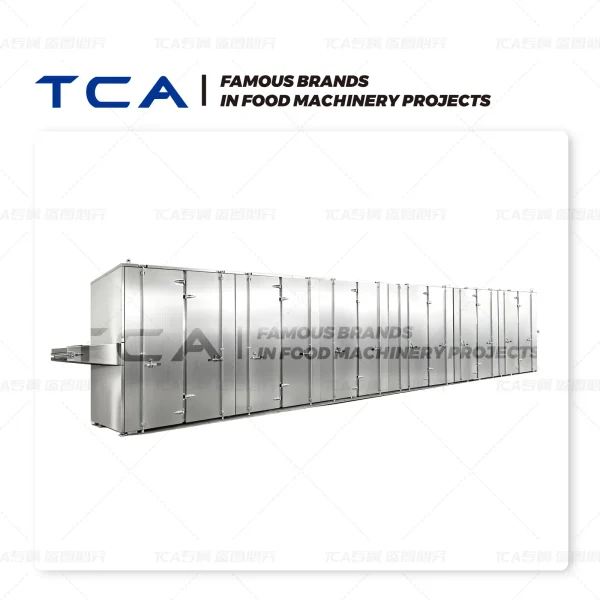

Multi-Layer Belt Dryer 800 kg/h
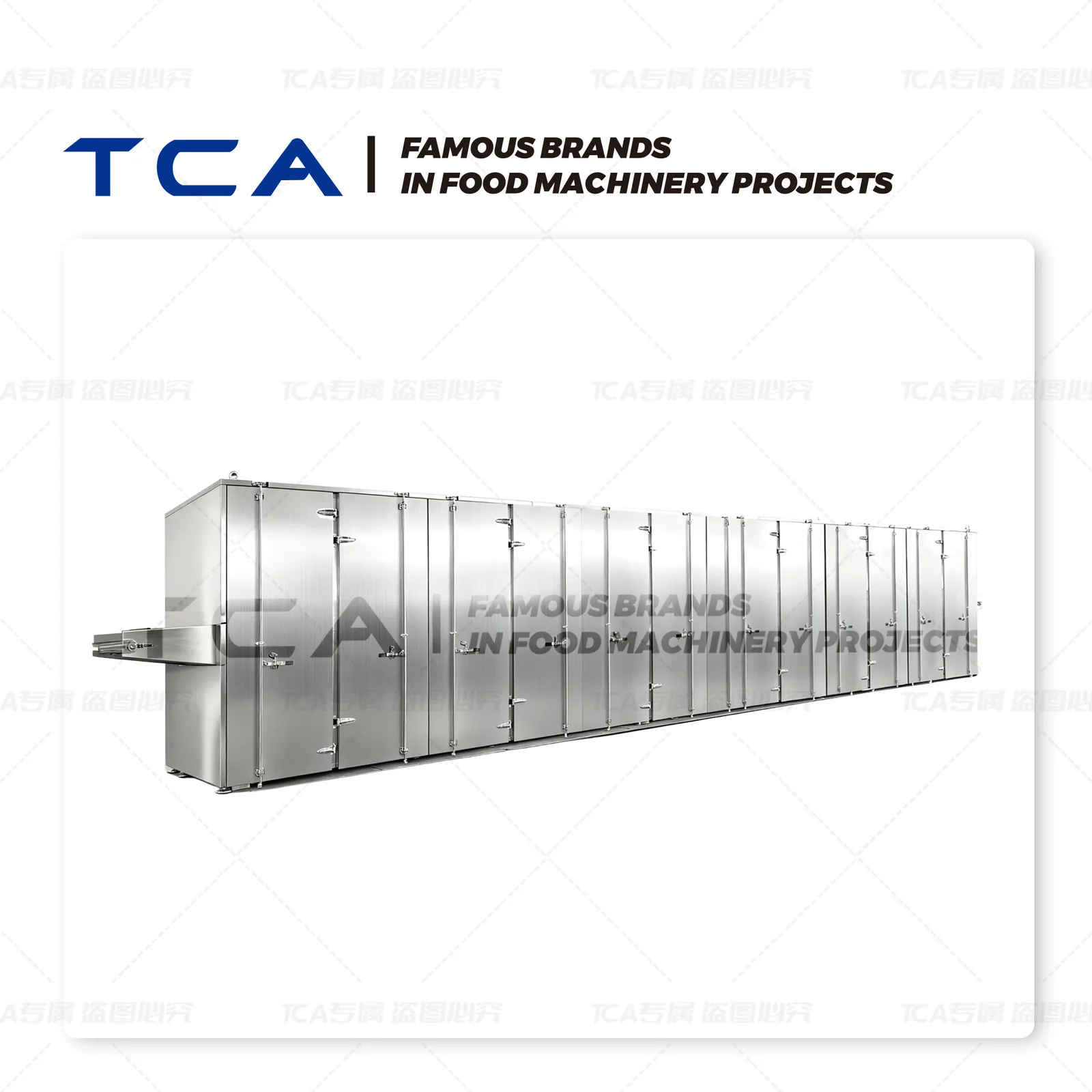
Continuous dryer that stacks several belt layers in one chamber to buy drying time with height instead of floor length. A single-layer belt dries fast products; a multi-layer machine dries the products that need hours — flakes, slices, cubes — without a conveyor run measured in tens of metres.
How it works
Product is spread on the top belt and travels the length of the chamber, then drops onto the belt below and travels back, layer after layer until it discharges at the bottom. Each transfer turns the product over, which is the quiet advantage: single-layer drying dries the top face of a slice and leaves the bottom face wet against the belt, and the turning at every layer equalises that.
Hot air is circulated through the layers by fans, usually in counter-flow or mixed-flow arrangement so the driest, hottest air meets the nearly-dry product and the cooler, humid air leaves at the wet end. Air temperature, circulation and belt speed set the drying profile; heating comes from a steam coil, gas burner, electric elements or a biomass exchanger depending on the site.
Suitable for
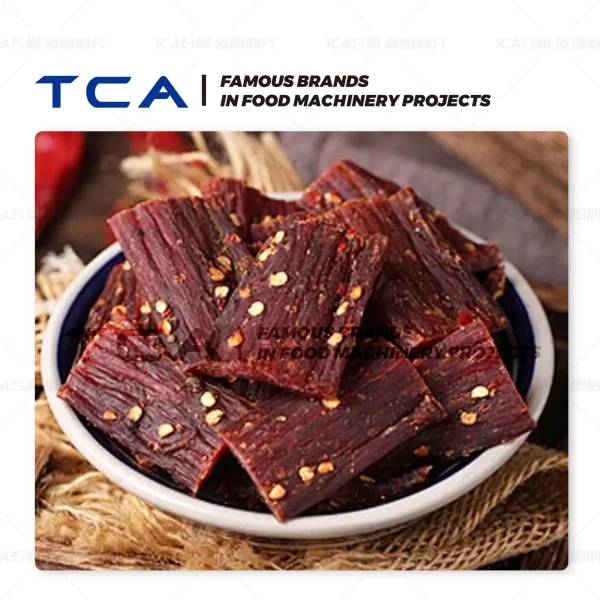
Vegetable flakes, cubes and slices needing one to several hours of drying; fruit slices for dried-fruit products; herbs and leafy material where gentle temperatures hold colour; plants where floor space, not height, is the constraint; dehydration lines fed by a cutter or slicer upstream and a milling or packing step downstream, running continuously.
Not suitable for
Products that break or mark when dropped between layers — the transfers are real events; very sticky products that weld to the belt at the wet end and need belt washing; small batches or frequent changeovers, where cabinet drying is simpler; anyone without a continuous upstream feed, because a multi-layer dryer stopped and restarted loses hours.
Material & compliance
Frame, belts and product contact parts in SUS304 (EN 1.4301); belts in food-grade polyester mesh or stainless mesh by temperature. Fans, coils and ducting arranged for clean-out, because dust accumulation in a dryer is the fire case; access doors along the chamber for belt inspection and cleaning.
Supplied with CE declaration of conformity and DoC on request; material certificate EN 10204 3.1 available for contact parts.
Selection notes
Ask for the evaporation rate in kilograms of water per hour at your air temperature, not the fresh-feed figure — that is the number that sizes the heating and the fans. Check the layer count against your product’s drying curve: too few layers and the machine is too short, too many and the transfers damage the product. Check how belts are tensioned, tracked and cleaned; belt tracking is the daily maintenance item on this machine class. Check the fire provisions if the product is oily or dusty.
When you should not buy this machine: If your product dries in under half an hour, a single-layer belt is cheaper and gentler. And if your plant cannot run continuous shifts, a dryer this size idles expensively — cabinet or tray drying may match your actual rhythm better.
Key specifications
| Parameter | Value |
| Capacity | 300-2000 kg/h fresh feed by model (TYPICAL, confirm with factory) |
| Layers | 3-7 belt layers by model (TYPICAL) |
| Drying temperature | 50-90 °C by product (TYPICAL) |
| Residence time | 1-6 h by product (TYPICAL) |
| Heating source | Steam, gas, electric or biomass exchanger |
| Product turning | Automatic at each layer transfer |
| Contact material | SUS304 (EN 1.4301) |
| Power supply | 380V/3P/50Hz or 415V/3P/50Hz, customizable |
Specification values are industry-typical ranges for this machine class and are not verified against a specific factory datasheet. Replace them with measured factory data before publication.
FAQ
Why is multi-layer better than one long belt?
Floor space and product turning. A single belt long enough for a three-hour residence would run tens of metres; stacking buys the same time in height, and the layer transfers turn the product so it dries evenly on both faces.
What heats it most economically?
Whatever your site already has. Steam is cheapest where a boiler exists; gas where it is available and priced well; biomass exchangers suit sites with cheap solid fuel but add ash handling. The dryer itself is agnostic; the exchanger is the decision.
Why did my flakes come out with wet centres?
Residence time or bed depth. Thick loading makes the layer transfers unable to expose the bottom face, and the centre dries last. Reduce bed depth at the infeed or slow the belt before raising the temperature — temperature alone just hardens the outside.
Related equipment
This unit is one stage of a complete processing line. For the full range of drying and dehydration equipment, or to compare this model against the Belt Hot Air Dryer 1 t/h 30 kW, see the complete equipment catalogue. Capacity, material grade and utility requirements can be confirmed through a quote request.

Reviews
There are no reviews yet.