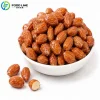
Peanut Coating Machine 300 kg/h
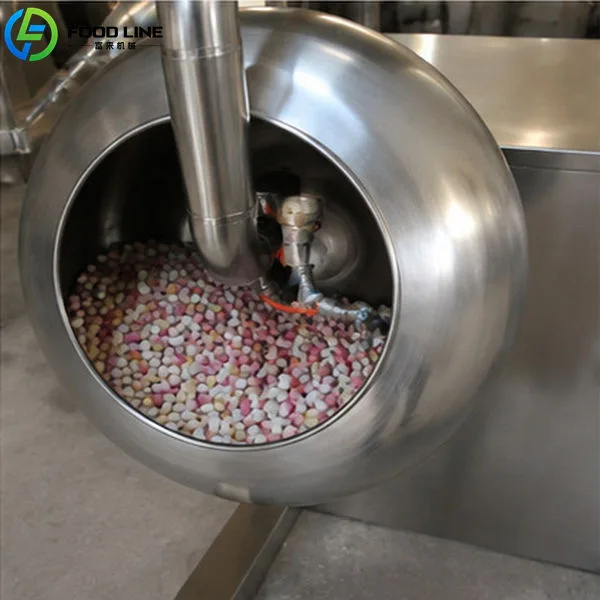
A coated nut is built in layers, and each layer is a chance to be uneven. The coating pan is the oldest answer — a tilted rotating pan where tumbling product meets a trickle of syrup or slurry plus drying air — and a good one mechanises the part that manual coating always gets wrong: the same dose, the same dry, the same turn, for every batch.
How it works
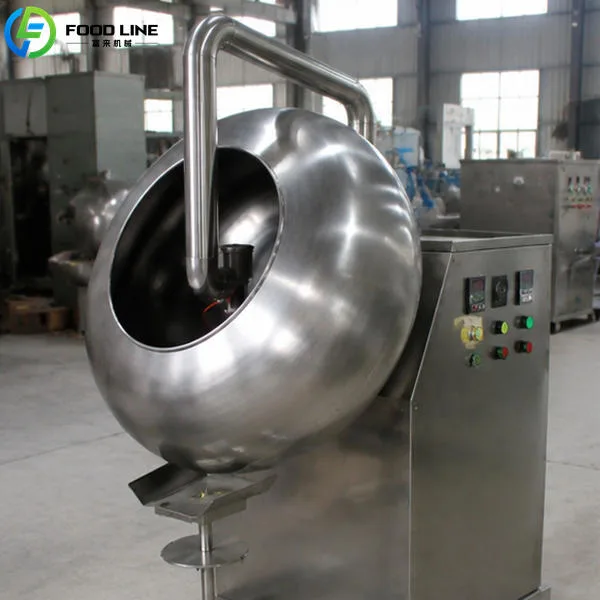
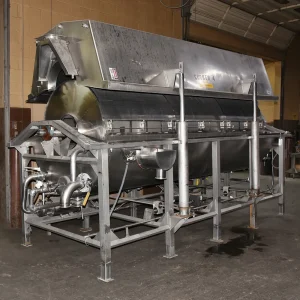
Roasted nuts charge into the tilted pan, which rotates and tumbles them in a consistent curtain. Coating liquid — sugar syrup, spice slurry or tempered chocolate — is dosed onto the moving bed at a controlled rate; the tumbling spreads it before it sets. Heated air is blown across the bed between doses, drying each layer before the next goes on. Layer count, dose rate, pan speed and air temperature are the four settings, and the recipe for each product is a sequence through them. The pan’s tilt is adjustable to change the bed’s turnover; too flat and the nuts slide without turning, too steep and they cascade too fast for layers to build. Coated product discharges by reversing the tilt, and passes to a cooling section to set the final layer.
Suitable for
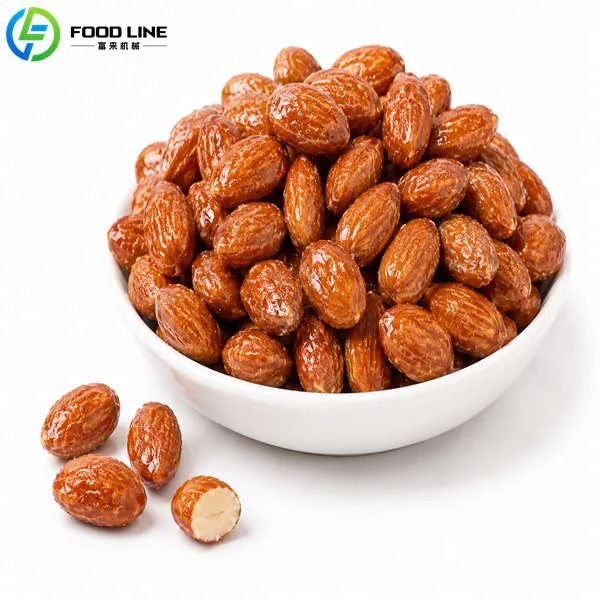
Sugar-roasted and honey-glazed peanut lines; spiced and seasoned nut snacks where the seasoning must hold through retail handling; chocolate-drizzled and chocolate-shell nuts feeding a cooling tunnel; producers upgrading from hand-turned pans, where batch consistency and labour both improve at once.
Not suitable for
Raw nuts — coating assumes a roasted, dry, oil-surfaced product; the roaster is an upstream requirement; very sticky or wet coatings without drying air, which cement the bed into a single lump; powder-only seasoning with no binder, which needs a seasoning drum with oil spray rather than a coating pan; anyone expecting continuous in-and-out flow — this is a batch machine by nature.
Material & compliance
Pan, dosing nozzle and discharge chute in SUS304 (EN 1.4301); pan interior polished for release. Dosing system with positive shut-off so syrup does not keep dripping after the dose. Drying-air fan with filter and temperature control. Pan tilt mechanism guarded; emergency stop at the operator position.
Supplied with CE declaration of conformity and DoC on request; material certificate EN 10204 3.1 available for contact parts.
Selection notes
Ask what products the supplier’s customers actually coat on the machine and taste samples — layer quality is visible and edible, and samples tell you more than specifications. Check the dosing system’s control: dose rate range, repeatability, and how recipes are stored between products. Check the drying air: filtered, temperature-controlled, and aimed where it does something. Check pan capacity against your roaster’s batch size — the two should pair, or the roaster waits. Check discharge and cooling arrangement against your packing line.
When you should not buy this machine: If your coating is a light seasoned dust, a seasoning drum with an oil sprayer is the right machine and a coating pan is overkill. And if you coat one product at high volume, a dedicated continuous coating line pays back faster than batches — the pan earns its keep on variety, not on volume.
Key specifications
| Parameter | Value |
| Batch capacity | 50-200 kg/batch, 100-600 kg/h by cycle (TYPICAL, confirm with factory) |
| Pan | Rotating, tilt-adjustable, SUS304 |
| Coating types | Sugar syrup, spice slurry, chocolate |
| Dosing | Controlled rate, positive shut-off |
| Drying air | Filtered, temperature-controlled |
| Cycle | 20-60 min by coating layers (TYPICAL) |
| Contact material | SUS304 (EN 1.4301) |
| Power supply | 380V/3P/50Hz or 415V/3P/50Hz, customizable |
Specification values are industry-typical ranges for this machine class and are not verified against a specific factory datasheet. Replace them with measured factory data before publication.
FAQ
Why does layering matter for coated nuts?
Because each layer has to dry before the next goes on, or the coating slides off in the pack. Dose-dry-turn repeated in thin layers builds a shell that survives handling; one thick wet dose builds a shell that cracks. The pan’s whole value is making the thin-layer cycle repeatable.
Can it chocolate-coat?
Yes, with tempered chocolate and a drying-air temperature matched to set it. Chocolate work is more temperature-sensitive than sugar syrup, so check the air system’s control range if chocolate is your main product.
Does the nut need roasting first?
Yes. Coating needs a dry, oil-surfaced, stable product; a raw nut weeps moisture under the syrup and the layer will not hold. Budget the roaster as part of the line, not an option.
Related equipment
This unit is one stage of a complete processing line. For the full range of cooking and blanching equipment, or to compare this model against the Rotary Roasting Oven 300 kg/h, see the complete equipment catalogue. Capacity, material grade and utility requirements can be confirmed through a quote request.
Reviews
There are no reviews yet.